












For years, Figma has established itself as the central tool for connecting design and development. Not just as a visual design space, but as an environment built with implementation in mind, supported by Design Systems, reusable components, and continuous collaboration between teams.
Design and development have never been completely separate worlds. There has always been communication, documentation, and teamwork aimed at building high-quality products. However, as products have grown in complexity, so have the friction points: validations, fine adjustments, and the time spent ensuring that what was designed reaches production exactly as intended.
Model Context Protocol in Figma builds on existing design and collaboration practices, accelerating and strengthening a connection that was already there.
What this approach is and why it matters
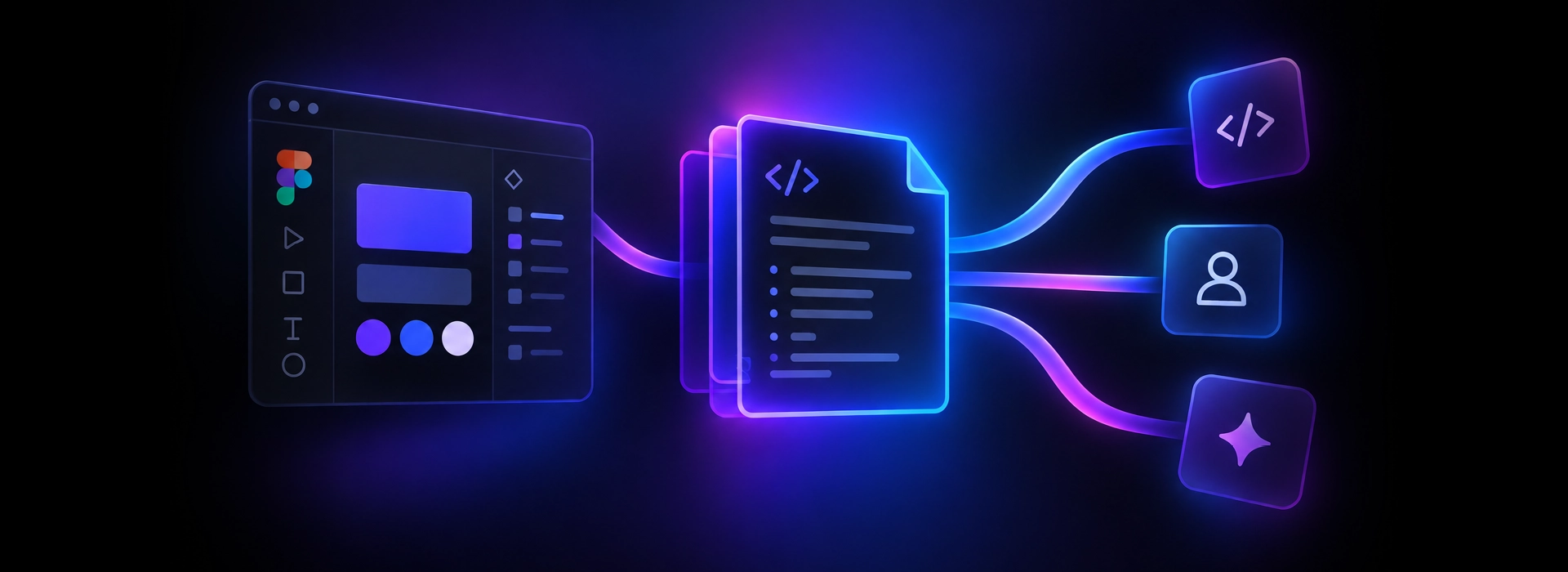
This approach works as a direct bridge between design and development, where the components defined in Figma become the primary reference for the system.
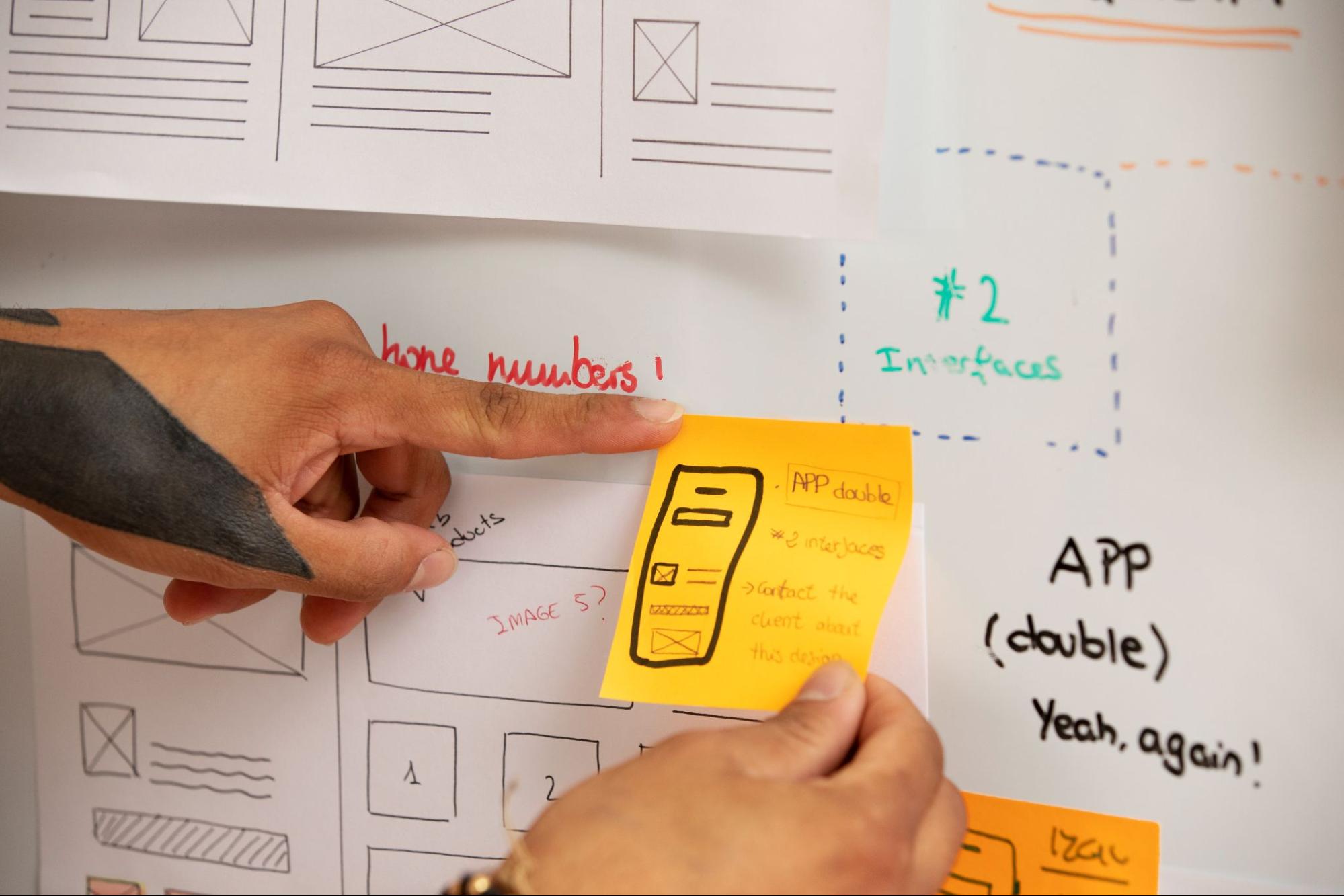
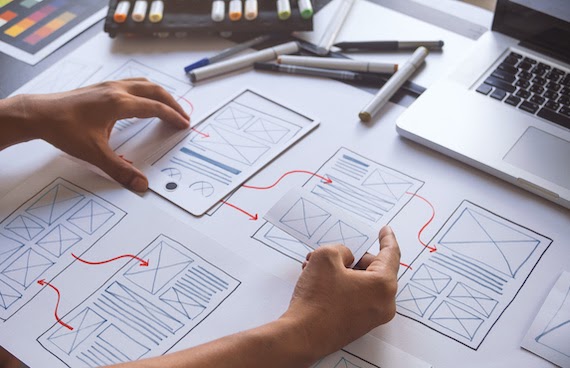
In practice, Design System components (buttons, inputs, layouts) are configured in Figma by defining variables, props, states, and variants. From there, the code consumes those rules to implement components consistently.
Instead of development interpreting or rebuilding design decisions, the rules already live in Figma, and the code adapts to them, ensuring structure, behavior, and variants stay aligned.
The design intent doesn’t change, but the workflow does.
Decisions are made earlier, validated in design, and carried into development without friction or reinterpretation.
This significantly reduces the communication gap. Design becomes an active source of system definition, and what reaches development already follows clear, shared rules.
Below is a short technical demo showing how this connection works in practice.
Where time is truly saved
Achieving a pixel-perfect implementation has always been possible, with strong communication, clear documentation, teamwork, and a solid Design System.The challenge is that this level of alignment usually requires constant validation and rework.
This integration doesn’t remove the need for collaboration, but it speeds it up.
By generating development components exactly as they are defined in Figma, using all their variables and properties, post-handoff adjustments are reduced and validation cycles become shorter.
After testing different ways of working with MCP, we found a clear pattern: the better structured and more consistent the Design System is, the more effective MCP becomes.
When components, variables, and layout rules are well defined, MCP amplifies that quality; when they aren’t, it simply exposes the gaps faster.
The result isn’t just speed, but focus: less time fixing inconsistencies and more time advancing meaningful features and experiences.
Speed with intention
Moving faster doesn’t mean working without judgment.
This approach improves how teams work by enabling earlier decisions, greater clarity, and less room for error.
It’s not about producing more screens, it’s about reducing friction: fewer unnecessary discussions, fewer late-stage adjustments, and more focus on the product and the user.
The designer as a strategic role (closer to development)
In this context, the designer’s role evolves naturally.
It becomes more technical and more strategic, with design decisions directly influencing how products scale, perform, and evolve over time.
With MCPs, design decisions gain a direct impact on product efficiency and on how the product is built. This doesn’t change the core value of design, it makes its consequences more explicit. Designers are no longer working only at the level of intent; their decisions actively shape the structure and behavior of the product.
Having a foundation in code helps designers understand how to create products that can be built faster, more safely, and at scale. A complete Design System enables this shift, but it also requires designers to deeply understand how the system is used and how each decision affects the broader product. At Qubika, we built Hiedra, an accelerated Design System created to support this way of working and help teams move faster while keeping design decisions tightly connected to implementation.
This evolution also reshapes collaboration with development. Roles remain clearly defined, but alignment happens earlier and with greater clarity. Designers focus on structure, consistency, and experience, while developers ensure robustness and correct behavior, working from the same foundation.
The outcome isn’t just better collaboration, but better decisions overall: less friction, less rework, and products that are easier to build, maintain, and scale.
AI, acceleration, and human judgment
Tools built on this type of connection, together with artificial intelligence, are extremely powerful.
They accelerate work, reduce friction, and optimize time, but they don’t replace thinking.
This isn’t just about generating faster; it’s about generating with intention, understanding what is being built, why, and for whom. Prioritizing product quality and user experience remains a human responsibility.
AI is advancing quickly, but not to replace designers or developers.
We won’t stop designing, and developers won’t stop coding. Automation accelerates processes, but analysis, judgment, and decision-making cannot be automated.
The faster we can move, the more important it becomes to think better.