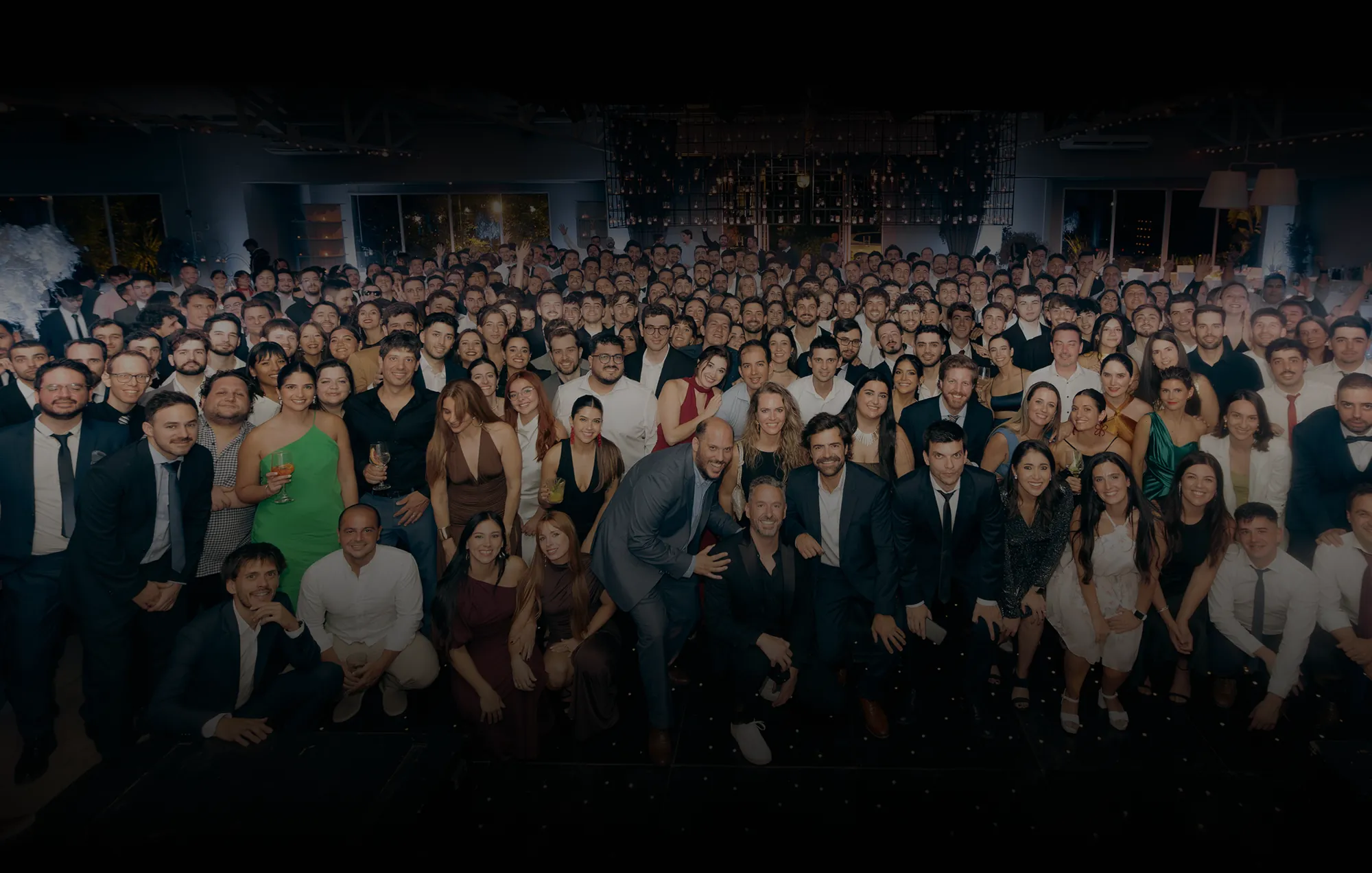





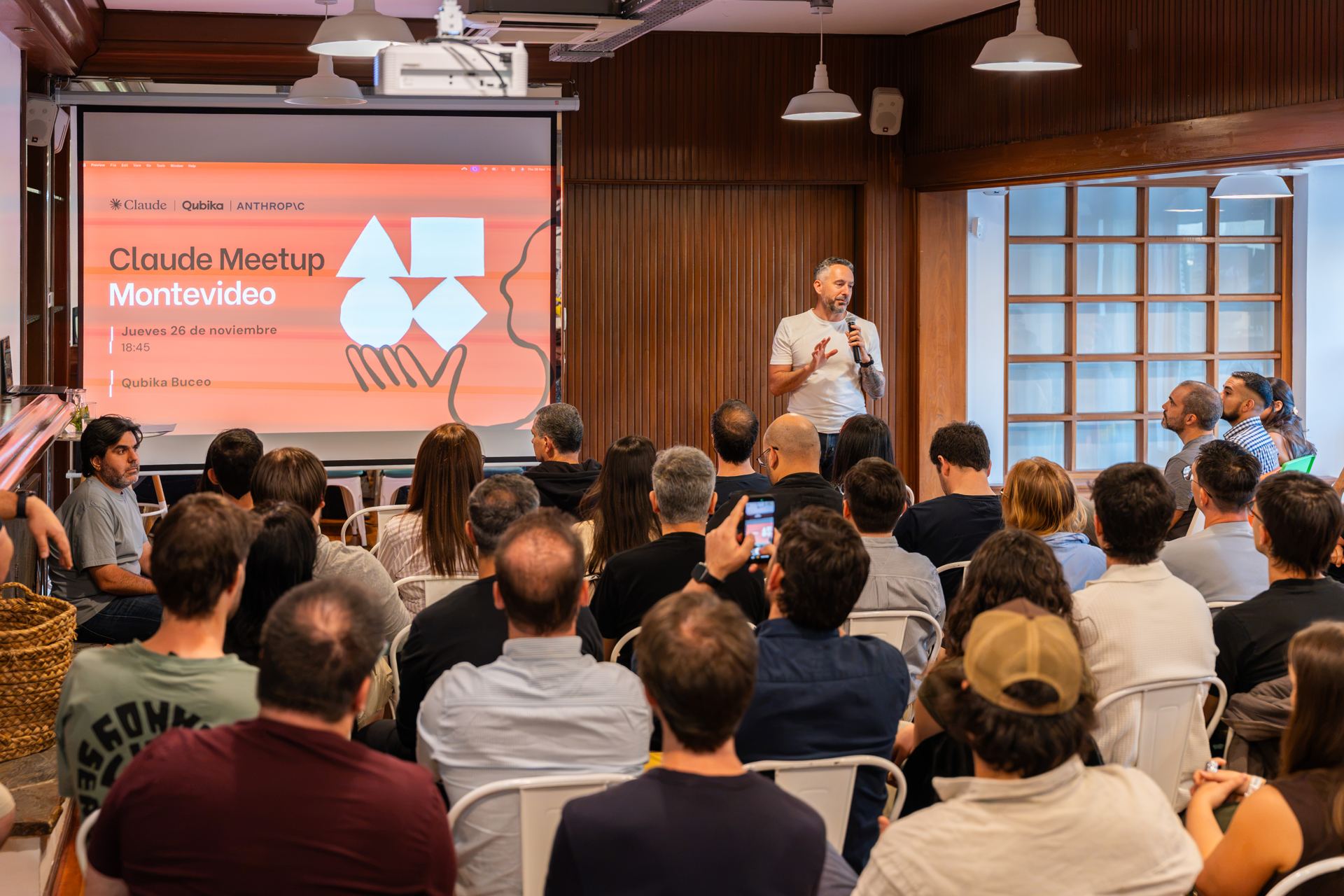
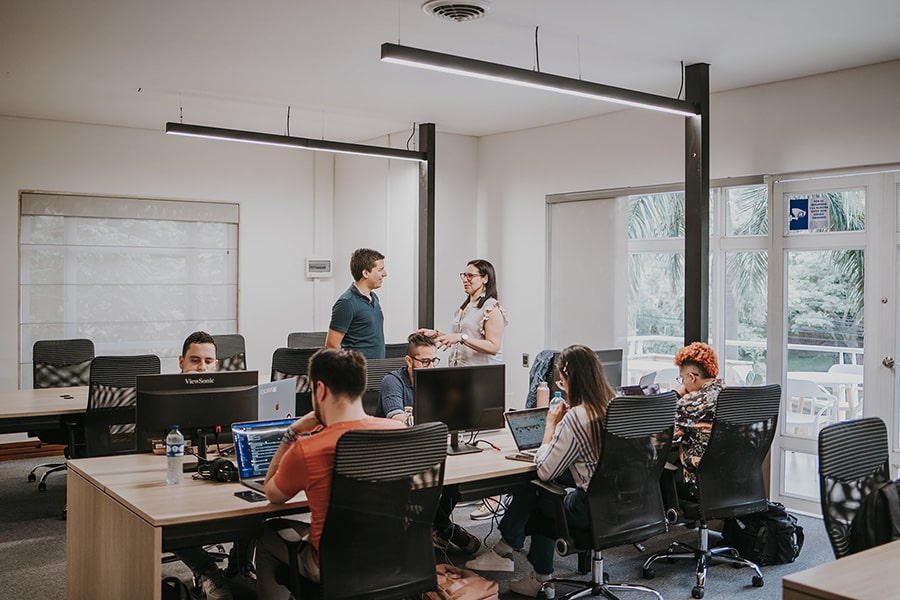
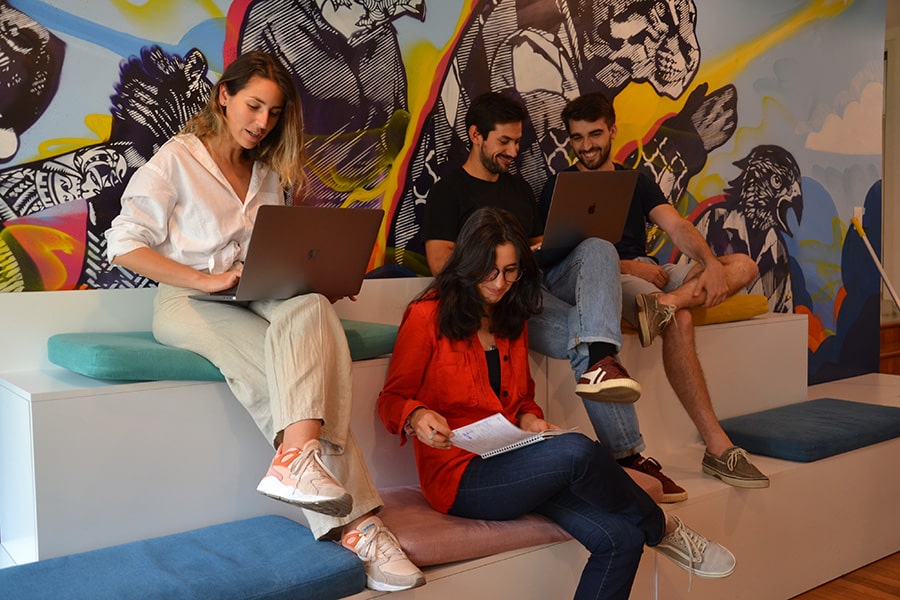
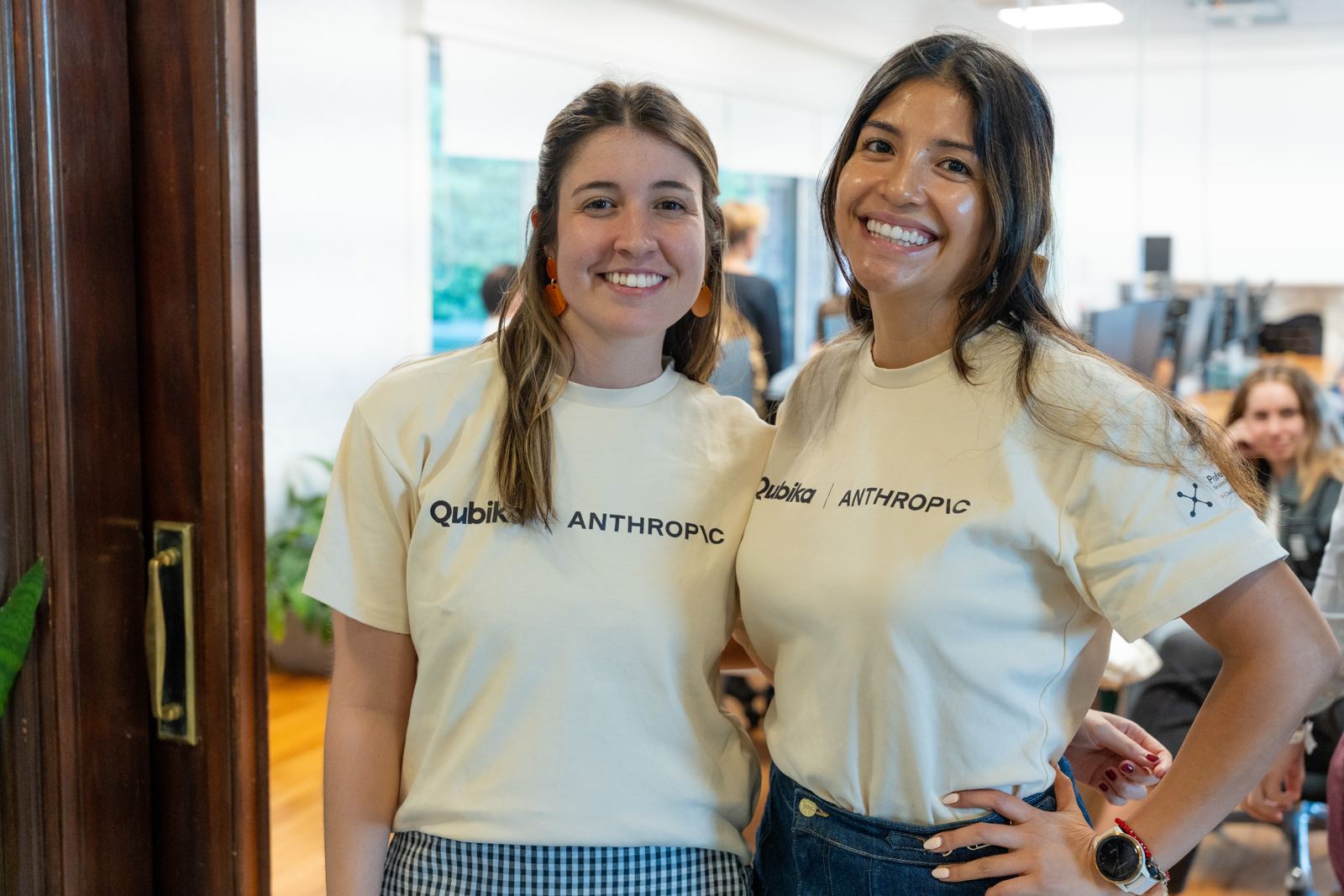
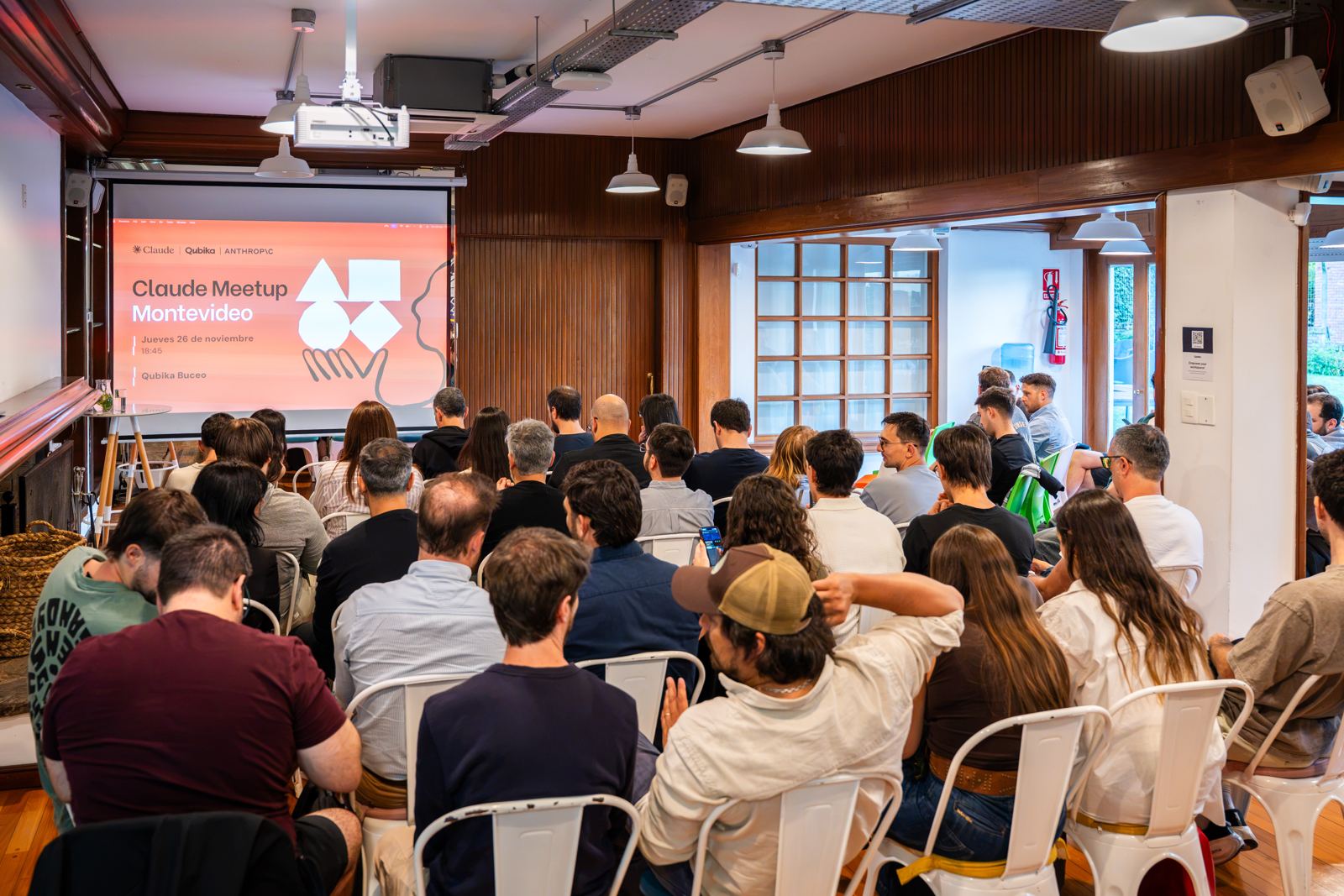
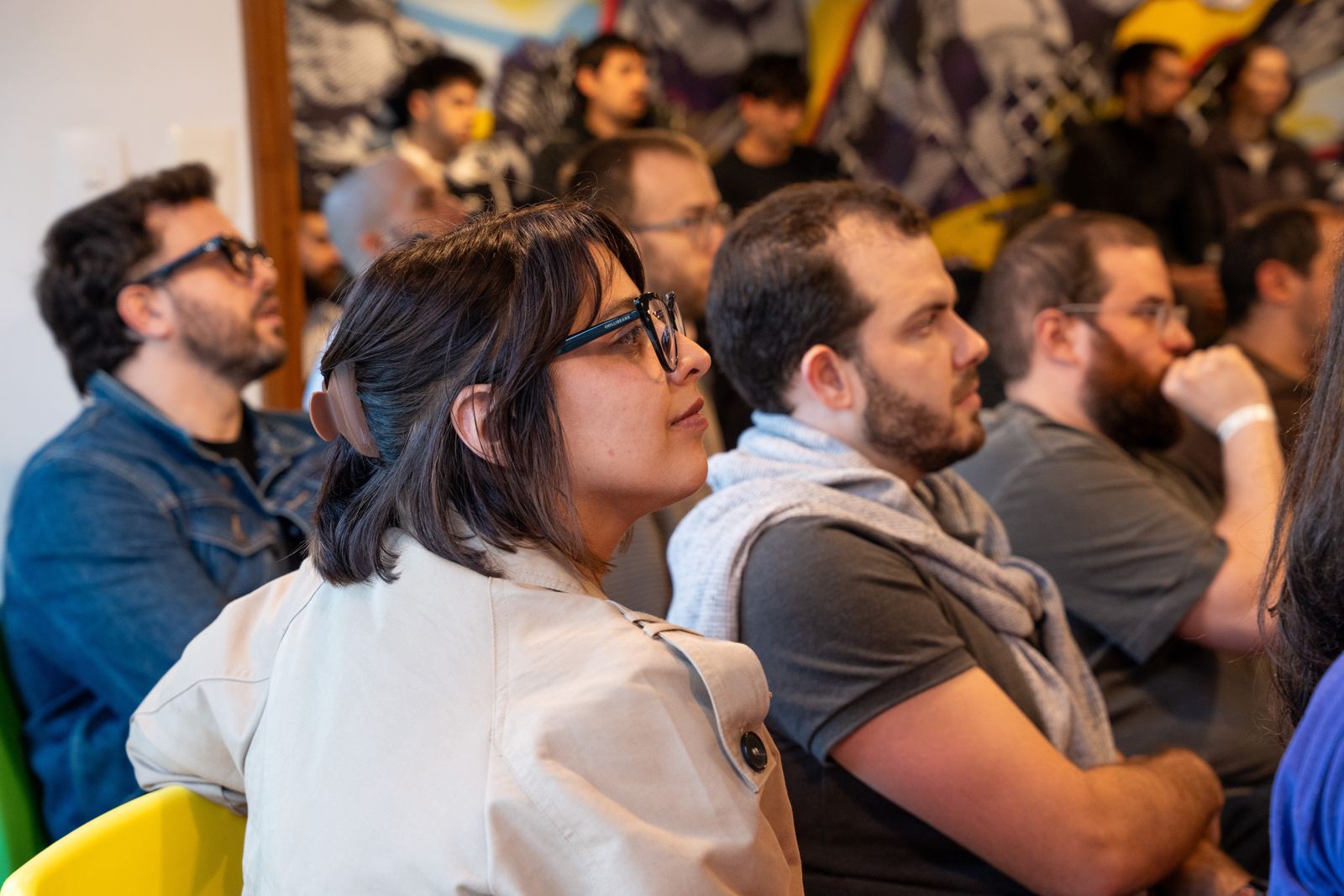
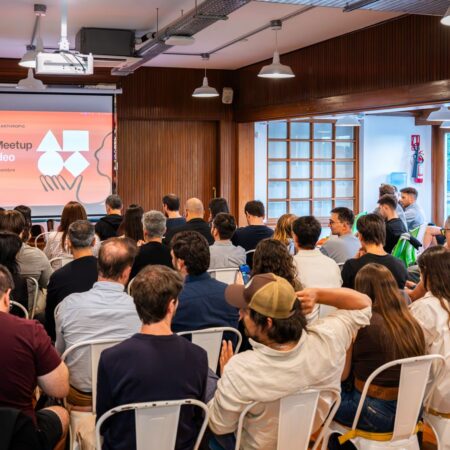
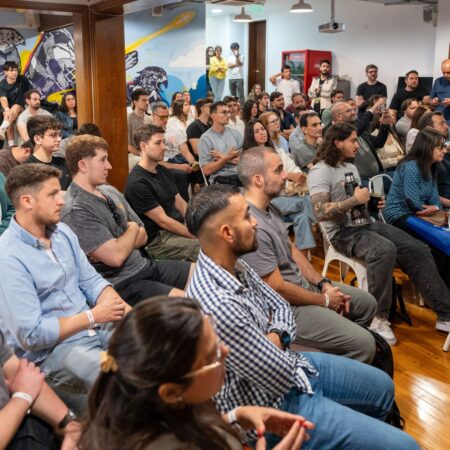
On November 26, Qubika hosted the second Claude Meetup in Montevideo: three parallel stages, four sessions, and more than 100 participants.
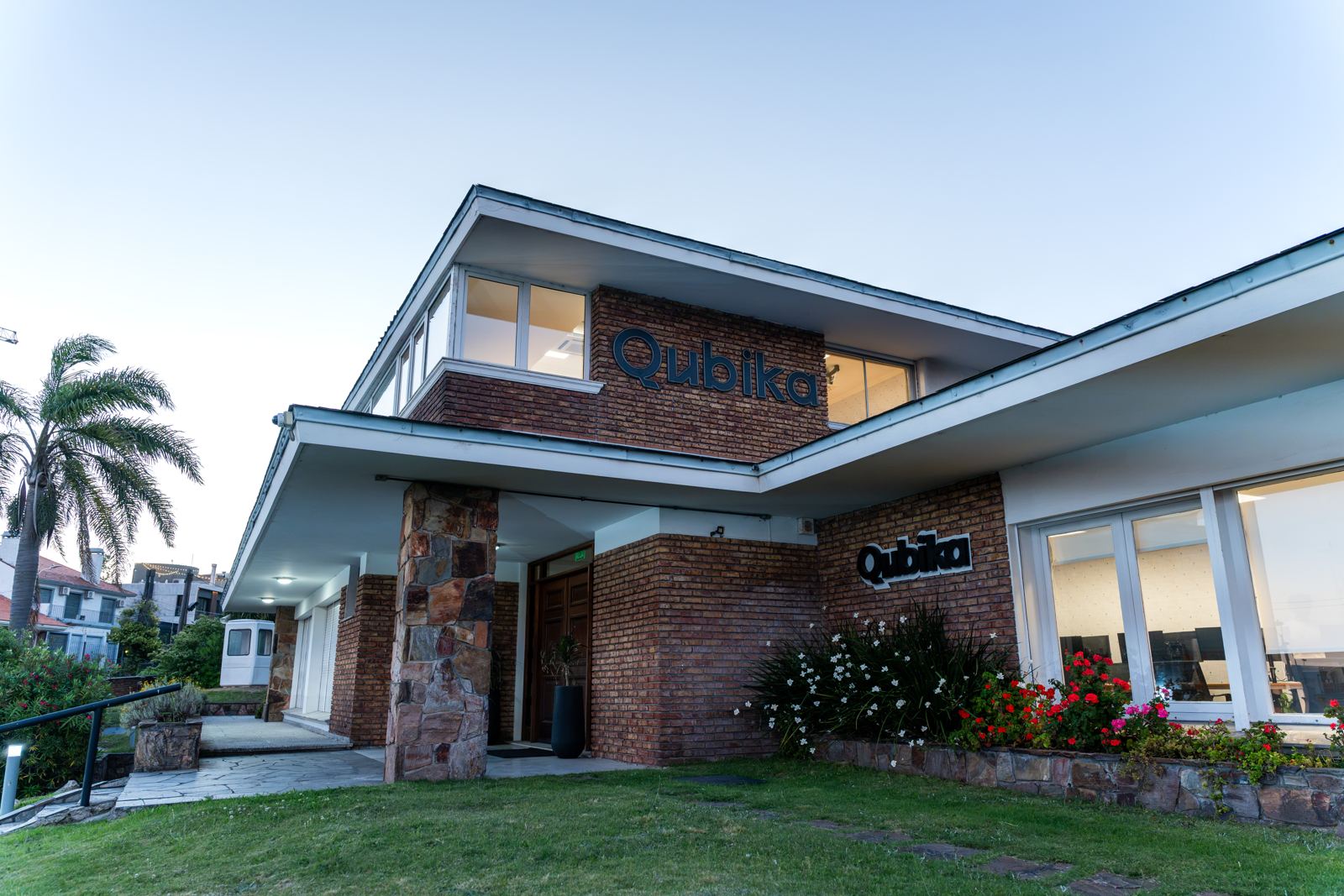
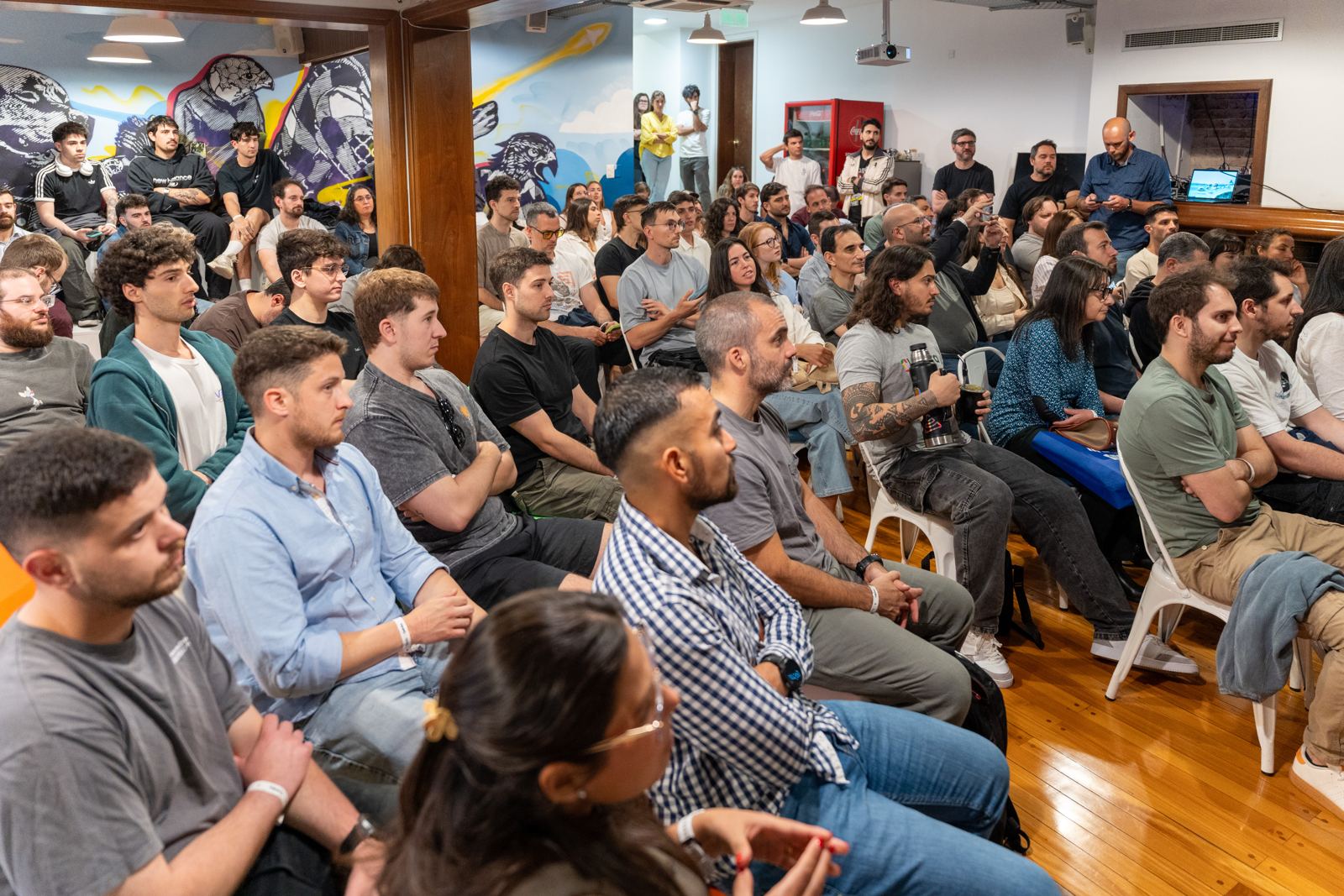
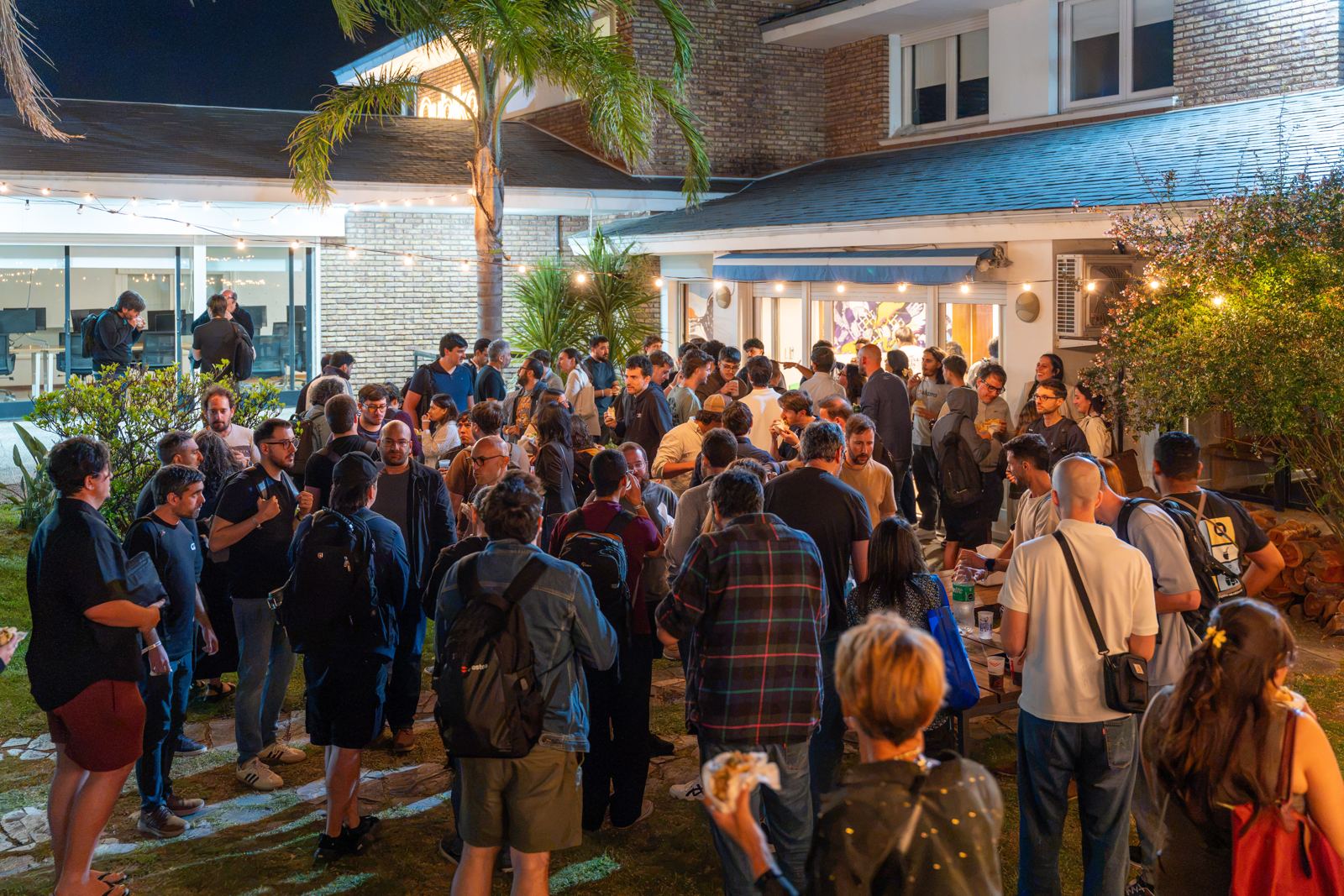
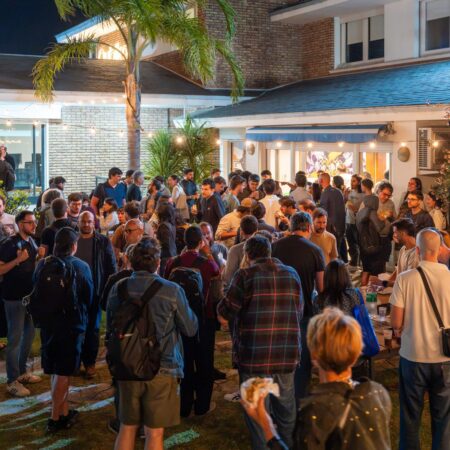
Our inaugural Claude Meetup in August gathered 92 artificial intelligence enthusiasts and software practitioners. Its first hands-on workshop sold out in just days, prompting us to open a second cohort to meet community demand. On Thursday, November 26, we returned with an expanded format: three distinct stages running in parallel at Qubika’s regional hub in Buceo, Montevideo, drawing a passionate crowd of over 100 developers, architects, and product managers.
The evening was organized by Qubika, an Anthropic Preferred Partner, and the idea stayed the same: real cases, what works and what doesn’t, without the hype. This time the program had four sessions: two talks on the Main Stage, a hands-on workshop on the Tech Stage, and a talk with no technical requirements on the Open Stage.
One night, three stages
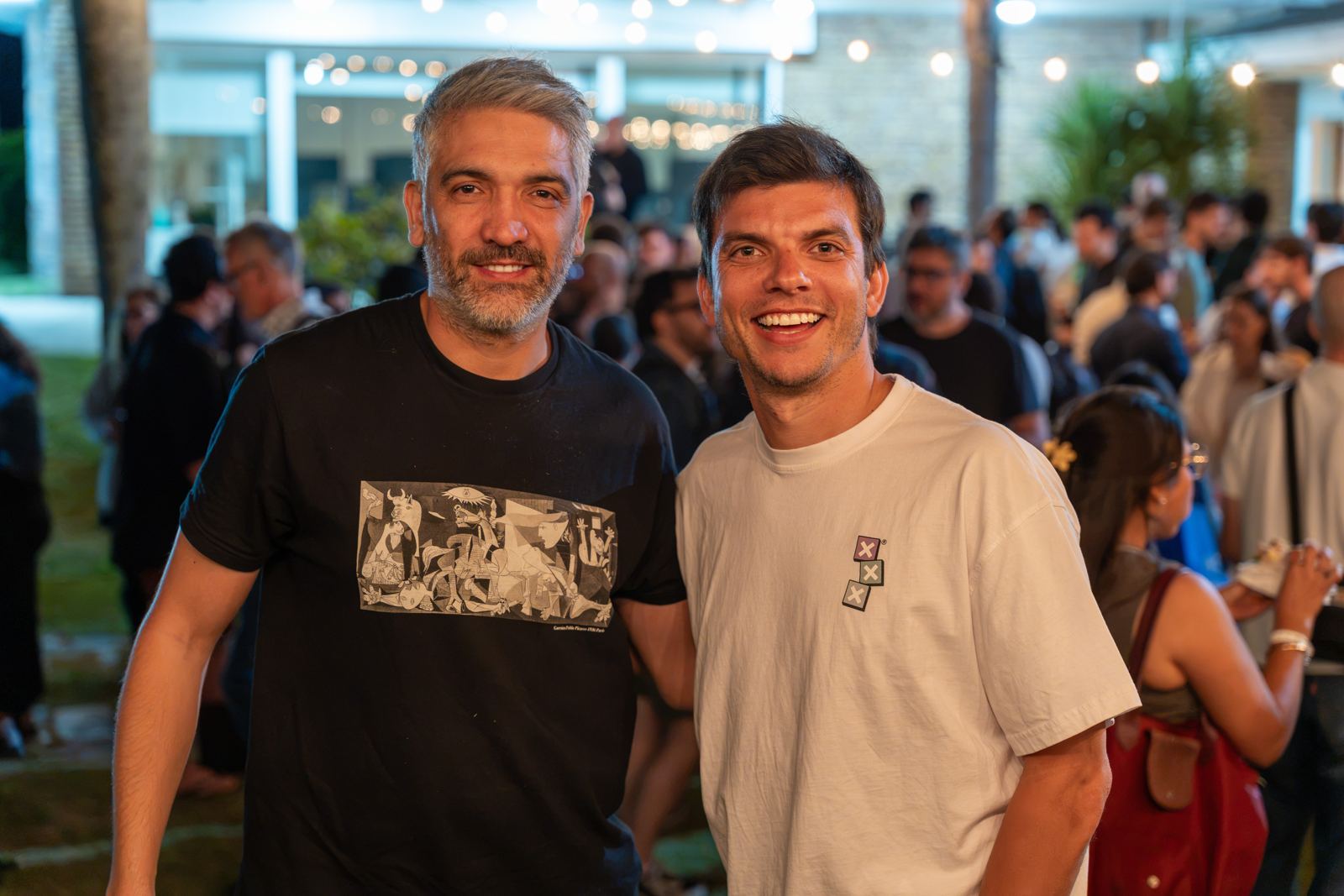
Check-in opened at 18:45 as participants filtered into the venue to pick up badges and stage schedules. Promptly at 19:00, sessions across all three tracks kicked off simultaneously, running straight through to 20:30. Each stage was carefully tailored to a specific experience level, ranging from foundational architecture to advanced hands-on implementations. Afterwards, everyone reassembled in the main atrium for an extended networking session with local food and drinks, enabling cross-stage discussions and deep-dive Q&A with the speakers.
Main Stage: two talks
Claude Managed Agents
Speaker: Martín Loy, Founder & Principal Engineer at Undermountain Coding Company.
Martín walked through how agents are deployed with Claude Managed Agents.
Claude Managed Agents is Anthropic’s suite of composable APIs for building and deploying cloud-hosted agents. Teams define the task, the tools, and the guardrails, and Anthropic runs the agent on its own infrastructure, handling the agentic loop along with state, memory, permissions, and scheduled execution. It launched in April 2026 and is aimed at long-running and asynchronous work.
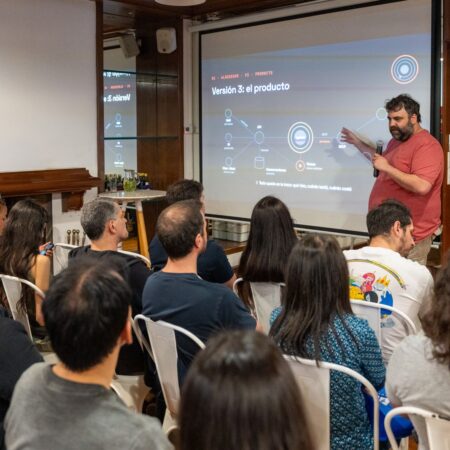
From LLM to agent and beyond: what we brought back from Anthropic’s Partner Basecamp
Speakers: Jeasmine Nahui, Gianfranco Zas, and Fabio Lima, AI Architects at Qubika.
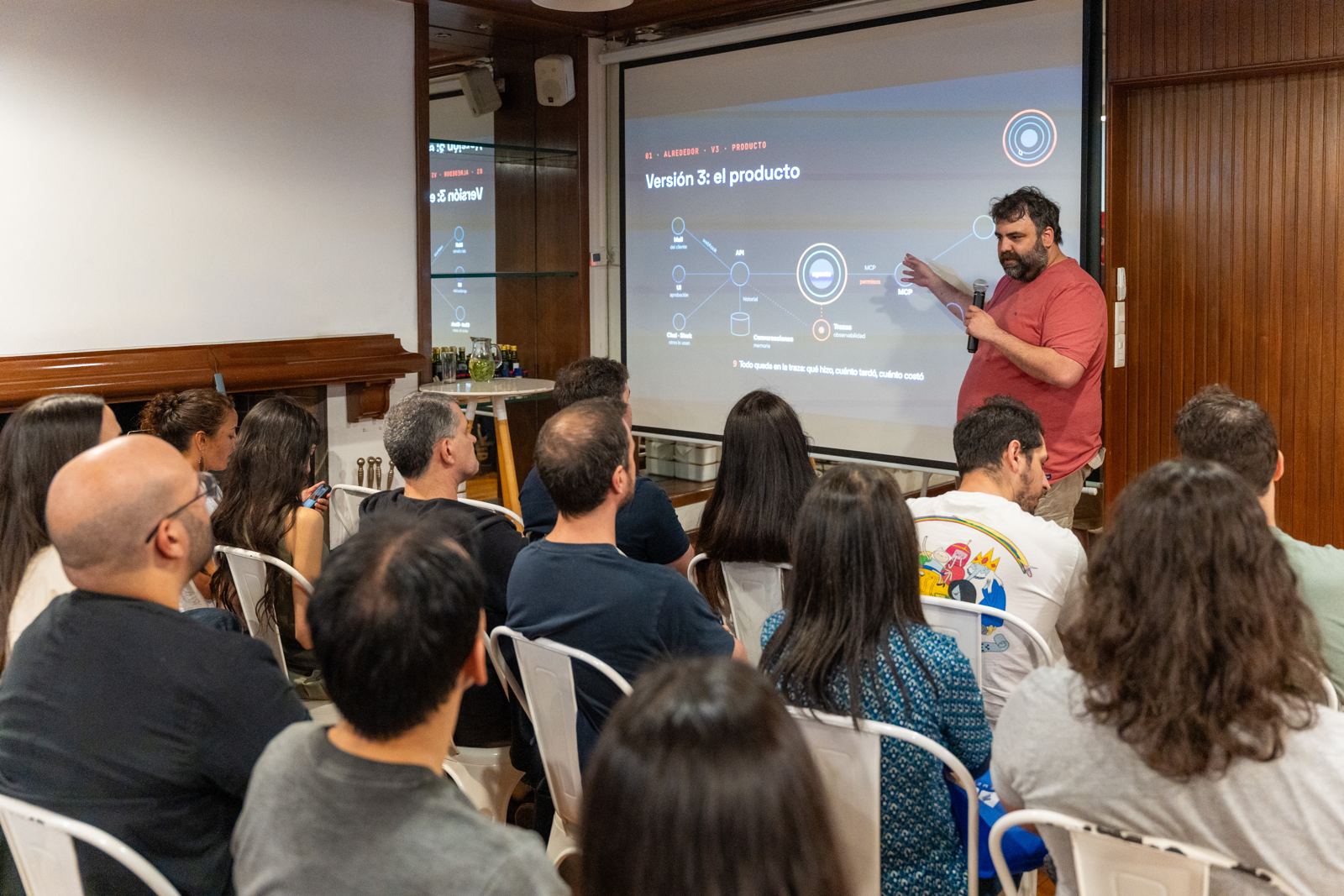
Jeasmine, Gianfranco, and Fabio spent two days in San Francisco at Anthropic’s Partner Basecamp, a hands-on training from the Applied AI team for Select and Preferred partners, with about 80 architects from the US, Latin America, and India. Their talk turned it into a path from having a model to having a product.
They started from an MIT NANDA finding: 95% of enterprise generative AI pilots show no measurable impact. The model didn’t fail; what surrounds it was missing. To show it, they followed one customer email, a double-charge complaint, through four versions of the same agent: the bare model, then tools, then skills carrying the company’s policy, and finally a product that shows the user what they need to approve an action. Not everything has to be an agent.
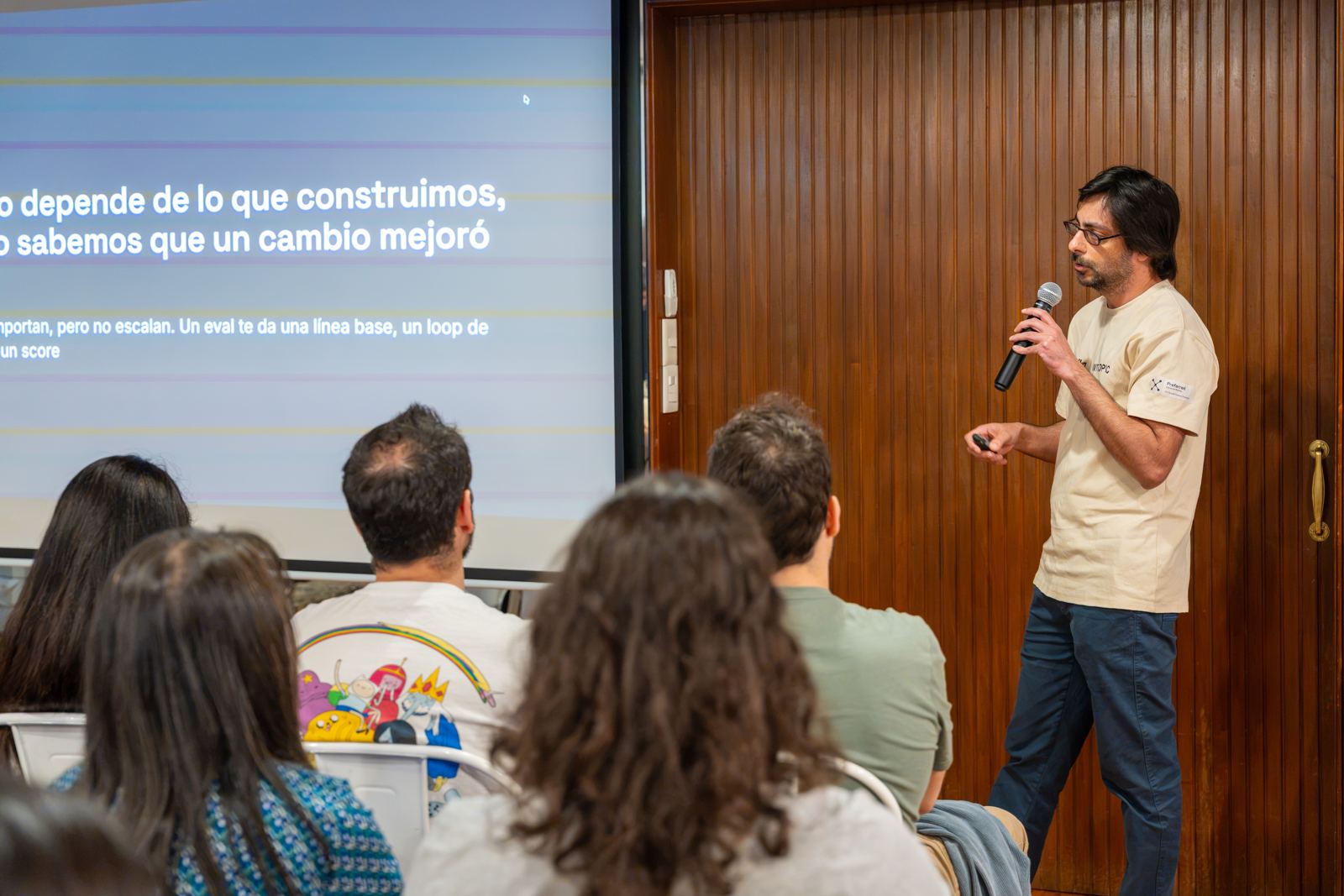
The next crucial question was how to prove that a system modification actually improves performance without regressing elsewhere. Comprehensive evaluations (evals) provide a repeatable baseline, a tight feedback loop, and quantifiable benchmarks. Demonstrating this, a standard e-commerce assistant saw its success rate jump from 33% to 100% after targeted adjustments to prompt structure, tool documentation, edge-case error handling, and a dedicated cart-total computation tool. In the Basecamp “Prompt Rescue” exercise, six promising modifications to a support-ticket classifier all seemed intuitive, yet rigorous evaluation revealed that only one yielded a net benefit.
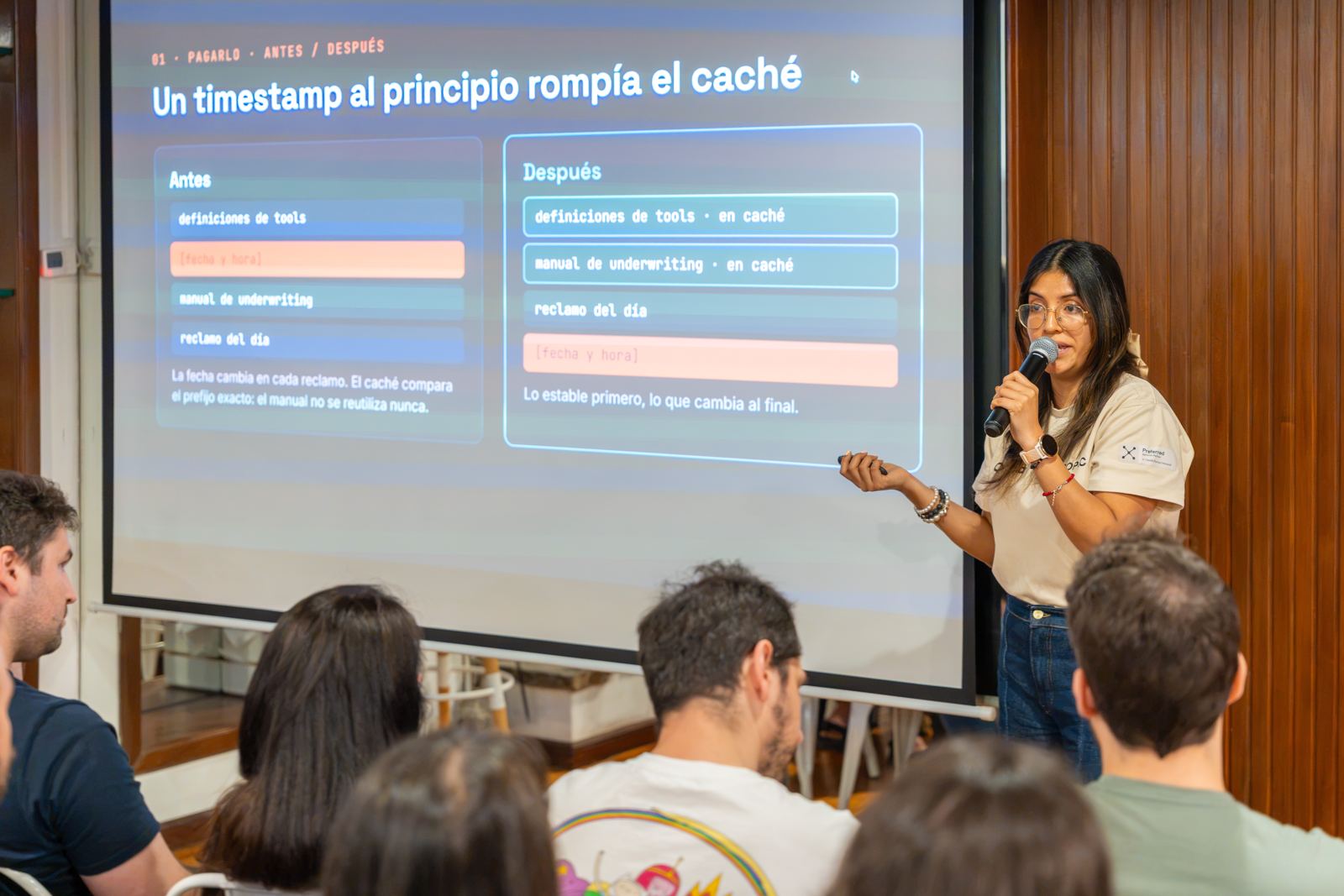
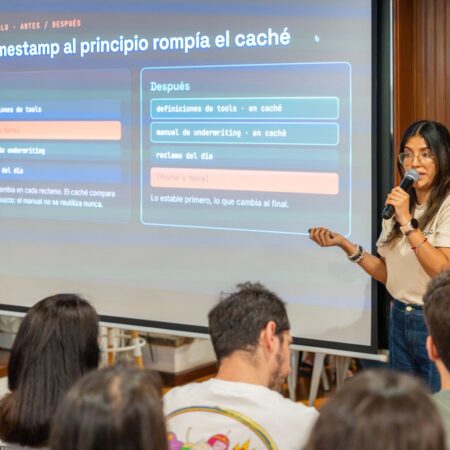
Passing evals does not make an agent viable. In their example, a claims agent passed 10 out of 10 evals, yet running it would cost $366K a year. Every turn resends the previous context, so cost grows faster than the number of turns. That is why they measure cost per completed task, put stable content first so the cache can reuse it, and start with a stronger model, then move down to a lighter one while increasing effort, as long as the evals hold. On security, the agent is not the user: permissions belong in the system, not in the prompt.
They closed with four ideas:
- Diagnose the system, not the model.
- Without an eval, there is no safe change.
- Measure cost per completed task.
- Permissions live in the system, not in the prompt.
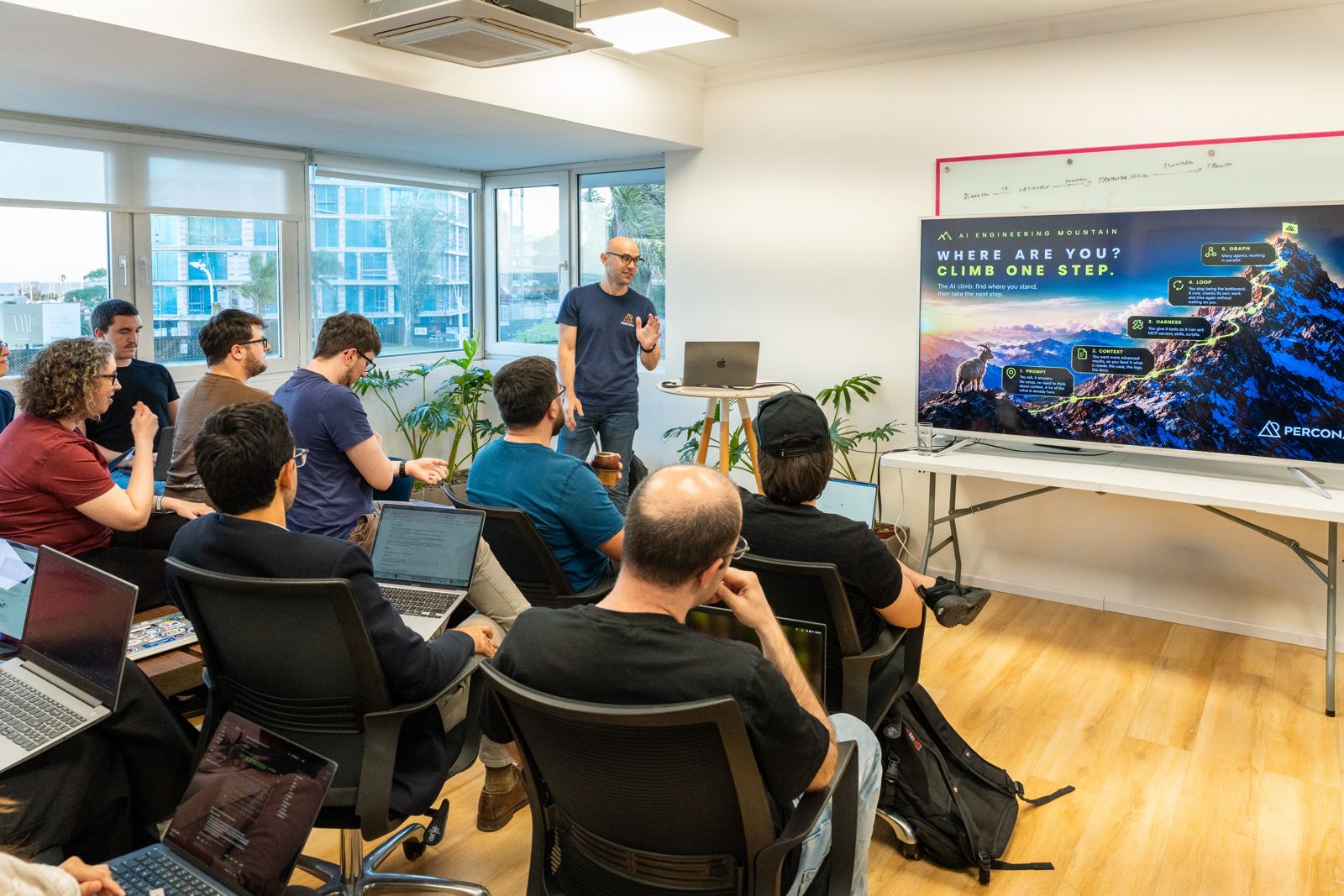
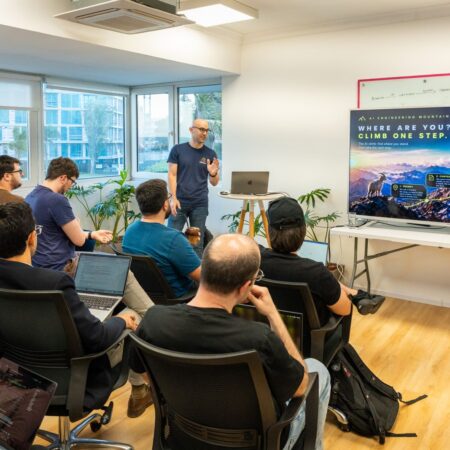
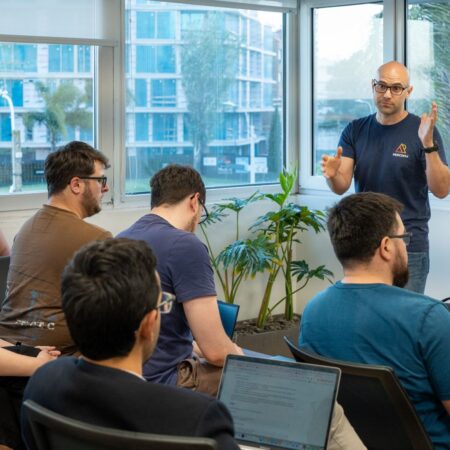
Tech Stage: a workshop on AI Engineering
A journey through the levels of AI Engineering adoption
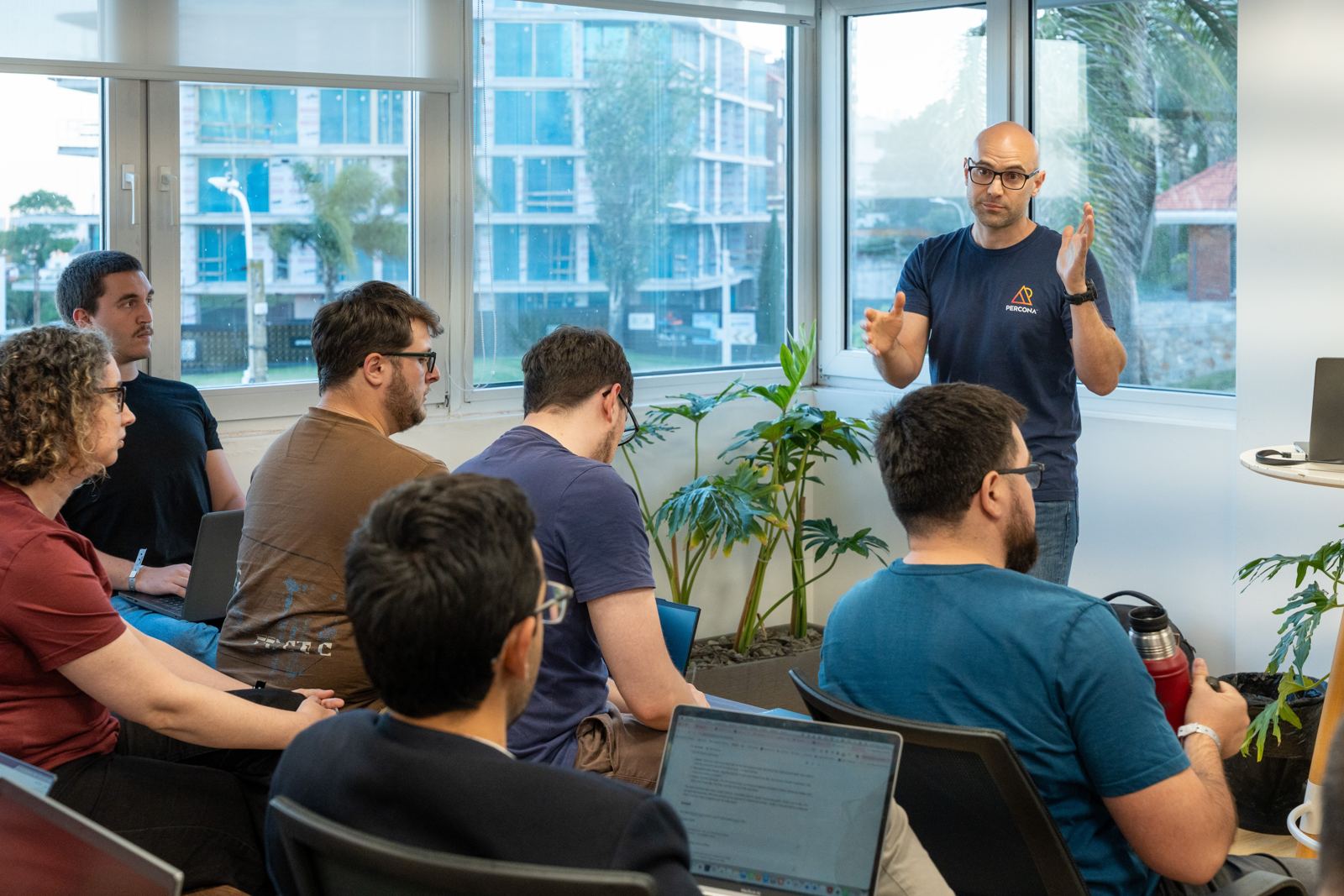
Speaker: Agustín Gallego, Lead Support AI Engineer at Percona.
Using one real project, Agustín walked through the levels of AI Engineering adoption, from the first prompt to a graph of agents. Each layer added a practice and a tool, with what it solves and the risk it brings. Attendees left with a map to place their team and decide how to move up a level. The workshop was aimed at developers, tech leads, and engineering managers, with no previous experience with agents needed.
Open Stage: a talk with no technical requirements
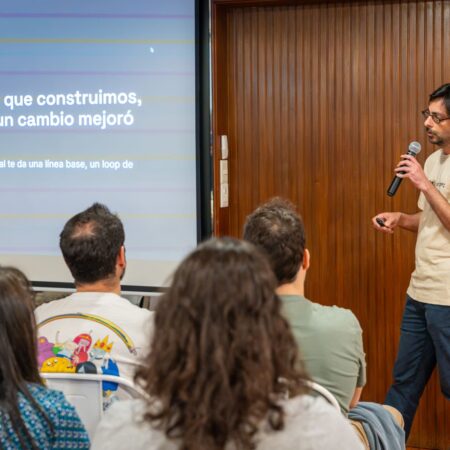
From click to intent: what we do when our interface stops being the entry point
Speaker: Florencia Fandiño, Product Experience Studio Lead at Qubika and Product Manager of Synapse.
Florencia started from a shift in how people use software. Users used to navigate screens, filters, and forms; now they say what they want with their context. The team’s job moves from building interfaces to designing the architecture of the experience.
She grounded it in Synapse, a platform that unifies the data of every company in a private equity portfolio and explains the reasons behind each KPI variation. Its users already work inside an LLM, so the team pulled two levers:
- Adoption: go where the user already is, with an MCP that brings Synapse’s data and business knowledge into Claude.
- Savings: don’t build what the LLM already does well. Instead of a Report Center with its own slide editor, a Claude skill on top of the MCP produces the board decks.
The MCP and the skill took about four weeks, against months for building an editor. What stays with the team is permissions, data quality, and checking the numbers. Florencia closed with a bonus track: Claude artifacts can now become desktop apps in one click, so how do we add value when anyone can build custom apps?
What we took away
Across four sessions and three distinct stages, conversations consistently converged on one essential principle: a powerful foundation model is merely a starting point, and long-term enterprise value stems from the robust engineering surrounding it. Whether through systematic evaluation suites, real-time guardrails and permission boundaries, or seamless integration tools like MCP, success hinges on system-level architecture. As Montevideo’s Claude community continues to grow, we remain committed to building space for these practical, production-focused insights.
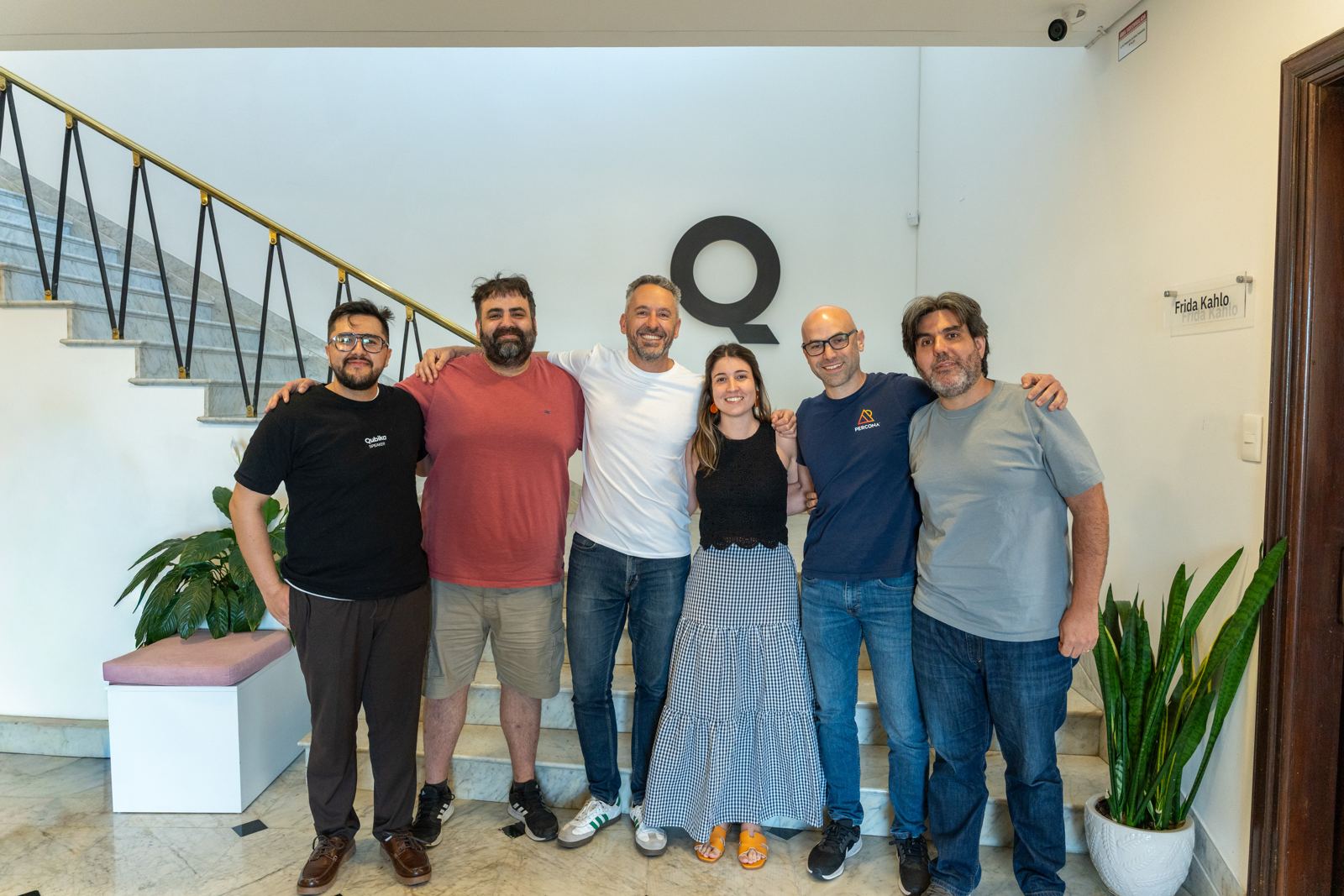
Were you at the meetup? Tell us what to cover next.
Two minutes, and your answers shape the next edition: the topics, the level, and the format.
LLMday joins the community
LLMday joined this edition with a discount code and a set of tickets for LLMday Montevideo, a full day of tech sessions, hands-on workshops, and networking for AI enthusiasts, on December 5 in Montevideo. Use the code CLAUDE_UY_LLMDAY40.
We’re excited to start bringing in allies who help the community grow, and we hope this is the first of many.
Join the Claude community in Uruguay
We’re planning more editions in Montevideo, with dates and registration details to be announced. The community is open to technical and non-technical participants.
Join the Uruguay Claude Meetup Group to hear about upcoming events. If you have a real use case to share or a topic you would like us to explore, contact the organizers through the group.
-
What is the Claude Meetup Montevideo?
A community meetup about building with Claude, organized by Qubika, an Anthropic Preferred Partner, in Montevideo, Uruguay. The second edition took place on November 26, 2026, with three parallel stages and four sessions.
-
What is Claude Managed Agents?
Claude Managed Agents is Anthropic’s suite of composable APIs for building and deploying cloud hosted agents. Anthropic runs the agent on its own infrastructure and handles the agentic loop, state, memory, permissions and scheduled execution. It launched in public beta in April 2026.
-
Why measure cost per completed task in AI agents?
Each turn of an agent resends the previous context, so cost grows faster than the number of turns. Measuring cost per completed task shows the real cost of a workflow, not just the price per call.
-
How can I join the next Claude Meetup in Uruguay?
Join the Uruguay Claude Meetup Group to hear about upcoming editions in Montevideo. The community is open to technical and non technical participants.