

One message came through loud and clear at the in-person day of Testear.la 2026, held on September 10 at Buenos Aires’ Savoy Hotel: testing as we knew it is gone, and Quality Engineering has taken its place. Artificial intelligence is running in production right now, and it is demanding validation standards nobody had to think about a few years ago. Across a full day of keynotes, panels, and workshops, that shift showed up again and again in different forms. Nowhere was it sharper than in the talk from Sebastián Passaro, AppSec Engineer at Qubika.
The Premise: One Bad Document Is All It Takes
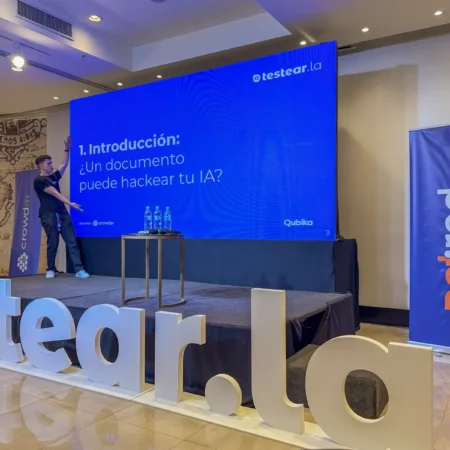
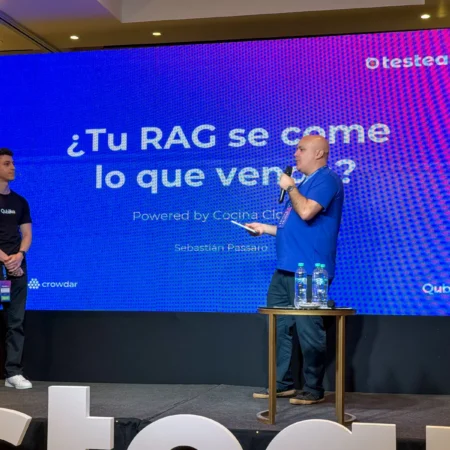
Sebastián’s session, “Does your RAG eat whatever comes its way?”, started from an uncomfortable truth about one of 2026’s favorite architectures. Retrieval-Augmented Generation has become the default way companies plug their own data into AI systems, feeding internal docs and knowledge bases into a model so it can answer questions with real, current context. That same openness is exactly what makes RAG dangerous. Drop one poisoned document into the knowledge base, and you can manipulate what the AI says, or push it into actions it was never meant to take. No exploit, no malware, just a text sitting in a knowledge base, waiting to be retrieved.
Building It, Then Breaking It
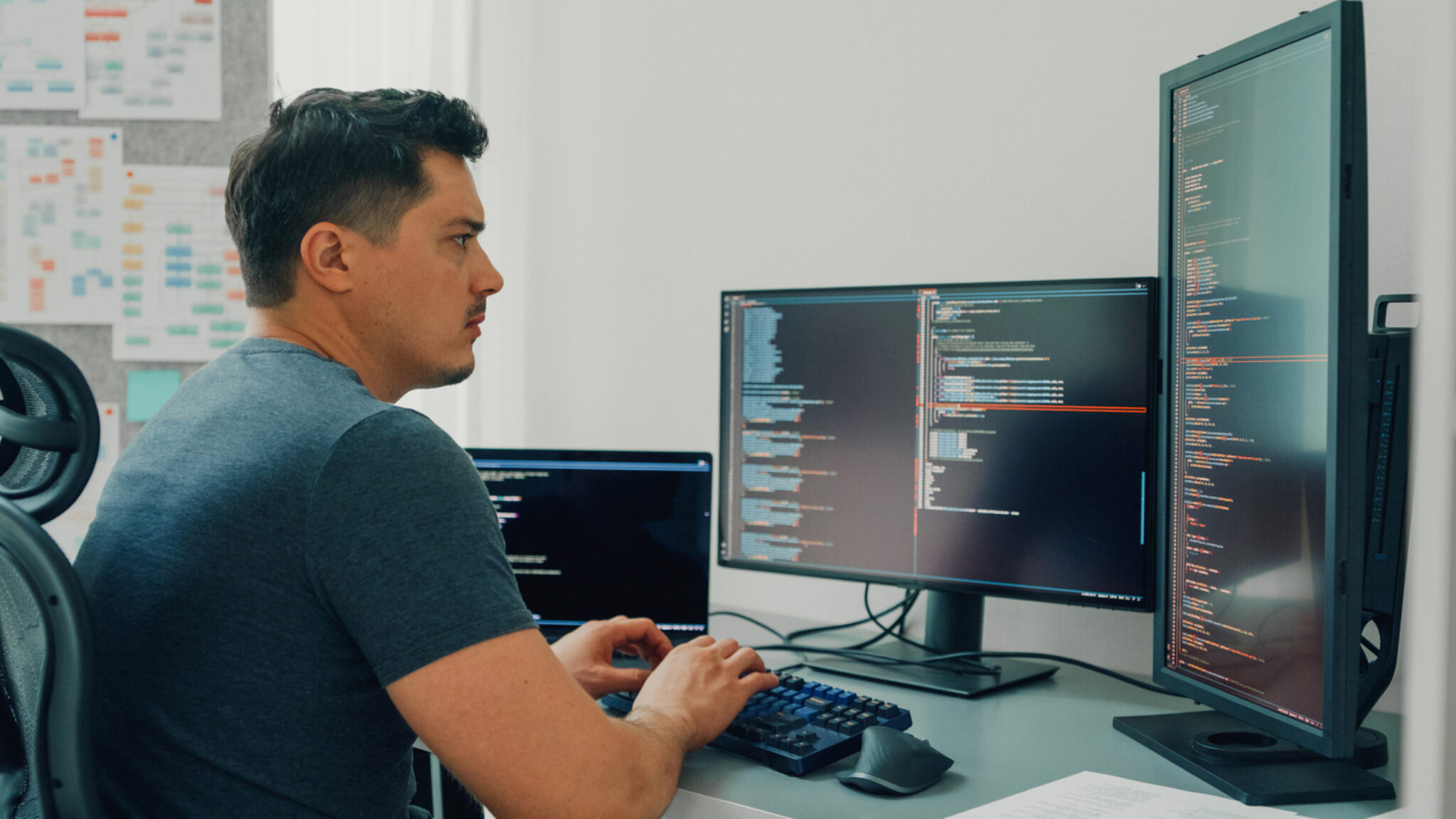
Rather than keep things theoretical, Sebastián did what AppSec engineers do best: he built the thing so he could attack it. On the Main Stage, he stood up a real RAG pipeline live, then walked the audience through poisoning it, showing exactly how a manipulated document can hijack a model’s output or trigger unintended downstream actions.
The attack corpus was not improvised. It was grounded in the OWASP LLM Top 10, the closest thing the industry has to a shared map of how these systems fail. He showed how open-source tooling can automate the hunt for these weaknesses before an attacker finds them first, and closed with a defense-in-depth approach: layered safeguards rather than a single fix, giving the room a concrete starting point for a threat model most QA teams have not had to reckon with until now.
From Tool to Target
What made the talk land was not just the demo, it was the reframe. For most of the day, AI was discussed as a tool, something that helps testers write cases, review code, or automate flows faster. Sebastián flipped that lens. AI-powered systems are not only tools for testers to wield. They are new surfaces that need to be tested themselves, with their own failure modes and their own place in a QA strategy. For a security engineer to land a Main Stage slot at a quality engineering conference says a lot about where the industry’s attention is heading.
The Rest of the Day, Through the Same Lens
Sebastián’s talk did not happen in isolation. It was one sharp answer to a question the whole day kept circling: what does quality even mean once AI is a permanent fixture in how software gets built?
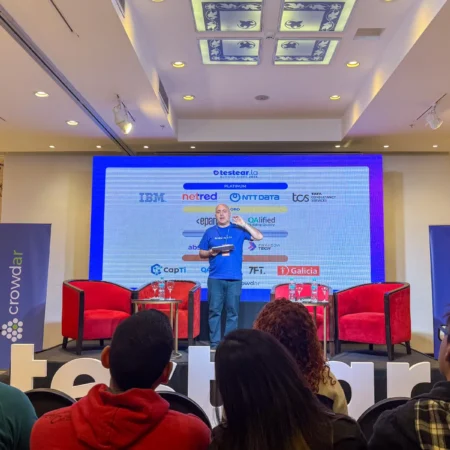
The opening keynote set the tone before a single line of code came up. Entrepreneur Connie Ansaldi made the case for the “polymath”, the professional who moves fluidly across disciplines rather than digging deeper into one. As AI swallows the monotonous, repeatable parts of QA work, the argument went, the professionals who matter most will not be hyper-specialists. They will be the ones who can connect testing with business strategy, empathy, and creative problem-solving.
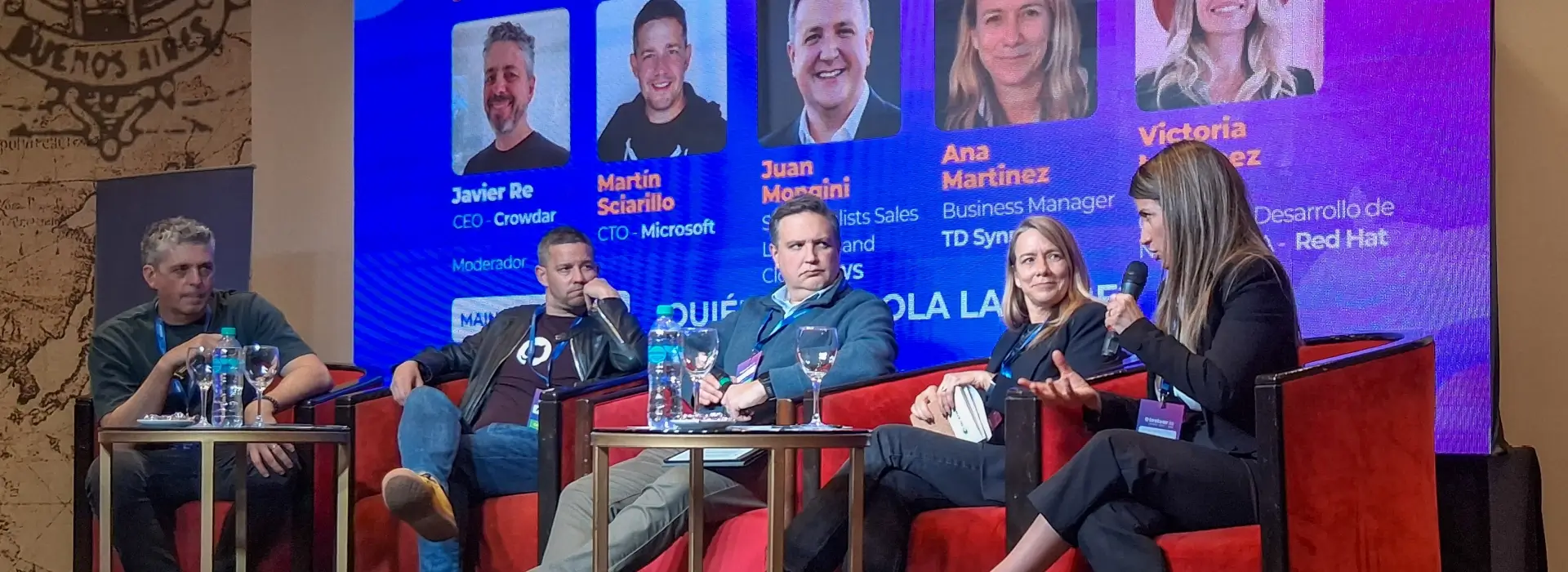
That same tension between infrastructure and ambition ran through the Cloud panel, where leaders from Microsoft, Red Hat, AWS, and TD Synnex debated who really governs cloud infrastructure now that it doubles as the engine room for large language models. The cloud stopped being just storage and compute a while ago. Today it is inseparable from the models running on top of it, which means CloudOps and QA increasingly share the same job: extreme observability, cost discipline for massive data processing, and a hard look at who actually controls the systems making decisions.
Nicolás Magni, co-founder at Cedalio, brought that abstraction back to earth with a talk on what actually happens when AI leaves the sandbox. His point: the real bottleneck is not building an AI feature, it is scaling one to thousands of concurrent users without the whole thing quietly degrading. That means relentlessly checking output consistency, catching hallucinations before they reach production code, and testing real-time data integrations under conditions nobody controls.
Leadership got its own reckoning in the Quality Engineering panel, where Natalia Higueret (QA and DevOps Manager at Banco Galicia), Fransa Aravena (Software Quality Engineer and founder of Mujeres Testing Latam), and Yanaina López (Sr. QA Lead and co-organizer of TestingUy) discussed what it actually takes to run a QA organization across security, data, cloud, and AI at once. Their shared conclusion: the days of QA as the gatekeeper bottleneck at the tail end of a release are over. Quality has to be built into a team’s culture from the moment a product is conceived, with repetitive pipelines automated away so human talent can focus on the parts of engineering that still need judgment.
Rossana Suarez, DevOps Tech Lead at Naranja X, made that trade-off concrete with a session on how generative AI has rewritten her code review process. AI can write and review code at remarkable speed, she argued, but it has no sense of architectural context or business logic. The engineer’s job is shifting accordingly: less about producing lines of code, more about auditing what a model produces with the kind of expert judgment that keeps a system secure and maintainable years down the line.
Why It Matters
Put together, the day painted a consistent picture. AI has stopped being something QA teams merely use, and started being something QA teams have to interrogate, for scale, for judgment, and, as Sebastián showed on the Main Stage, for outright security. That is exactly the kind of thinking Qubika brings to the table.
Relive the Day
Want the full atmosphere, the Savoy stage, the crowd, the Q&A energy?
Two recaps from the day are worth a watch: