









Databricks Data + AI World Tour NYC Keynote: Key Takeaways
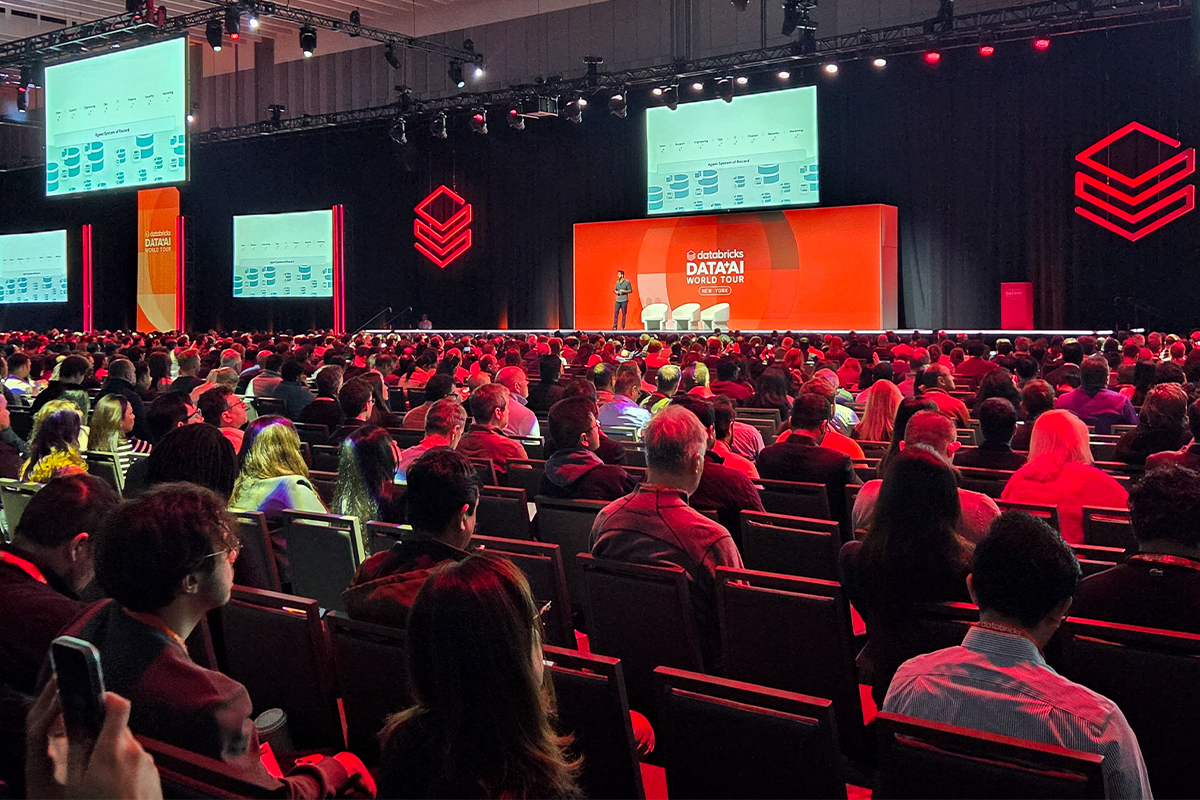
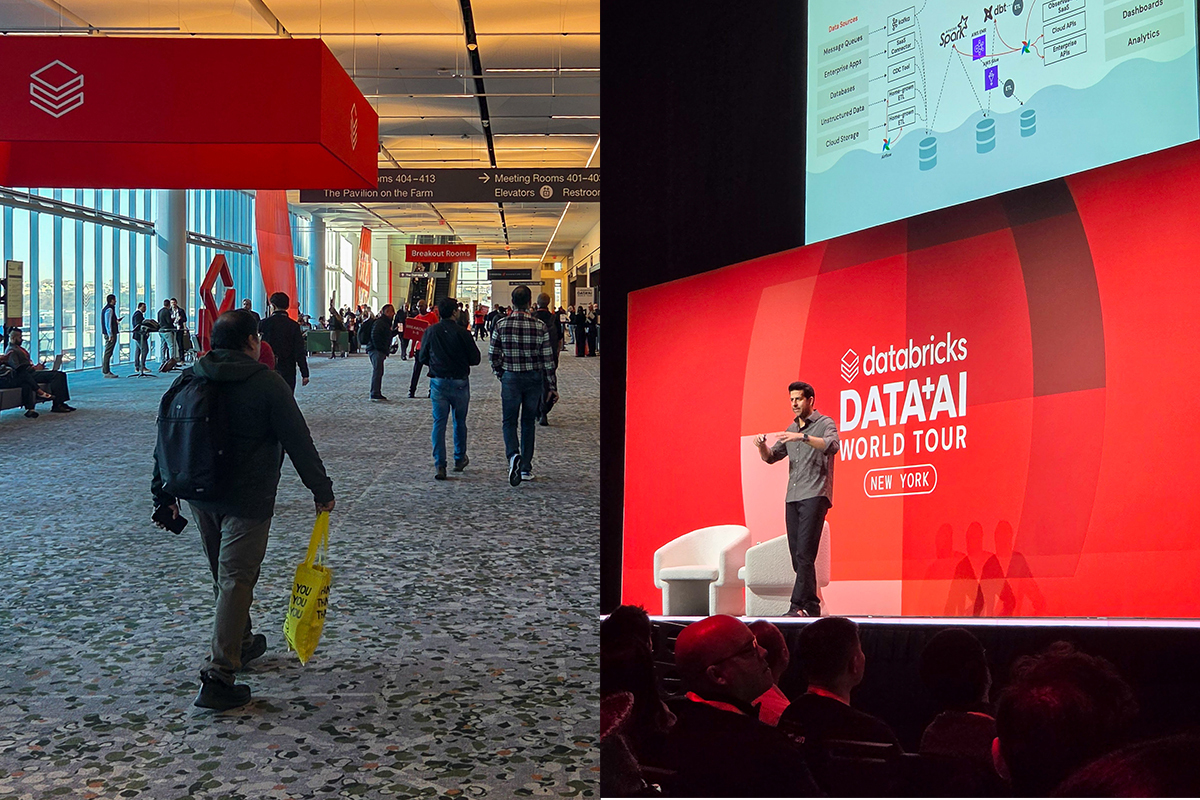
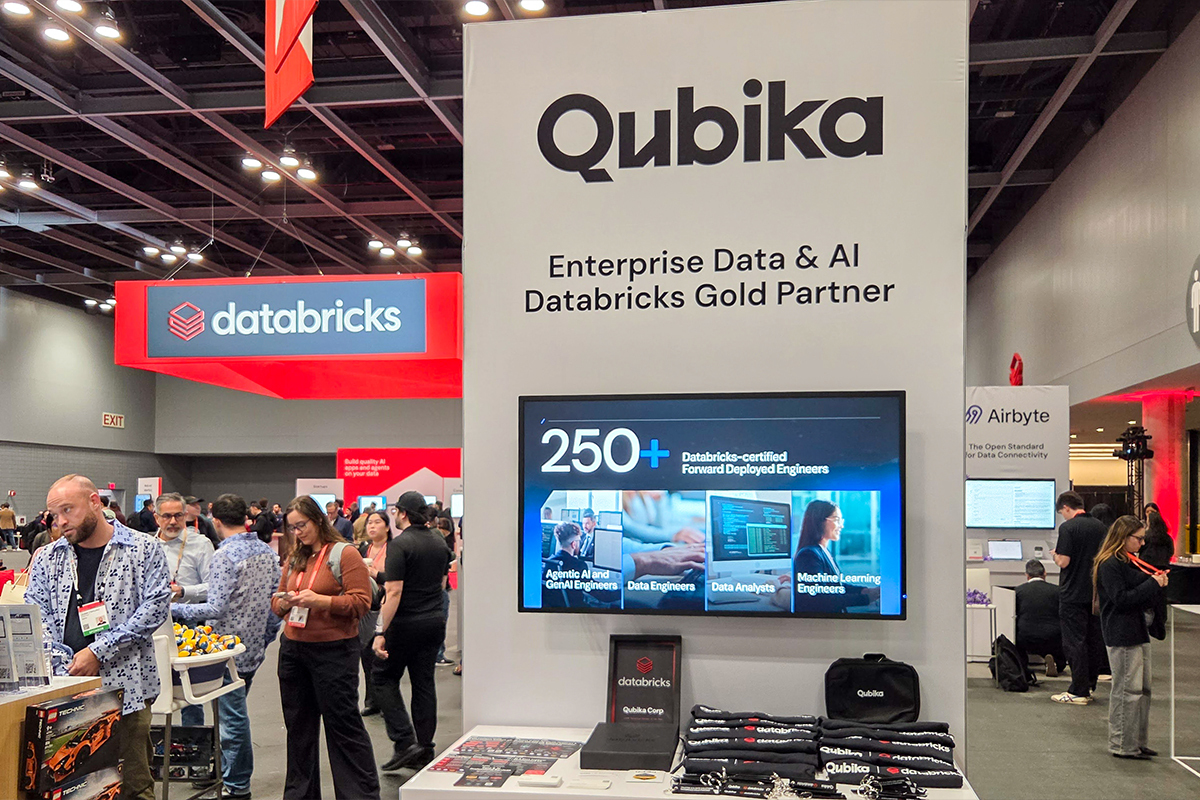
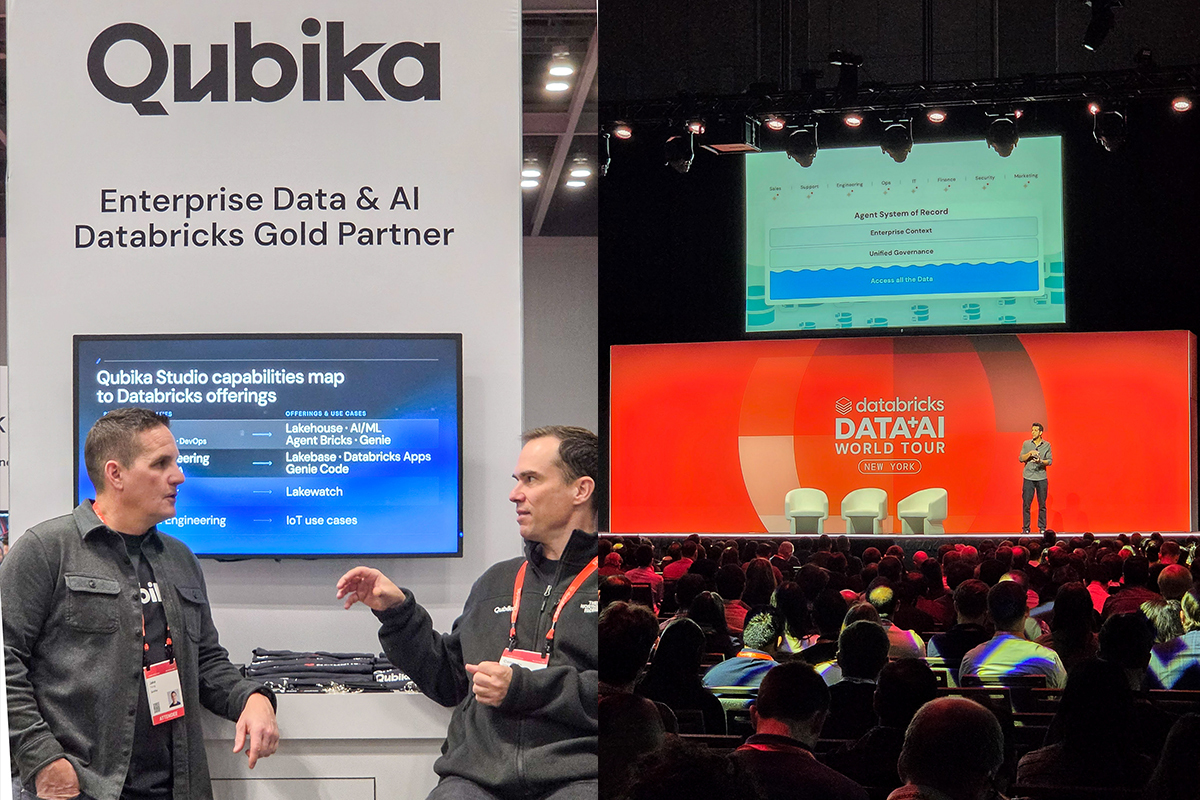
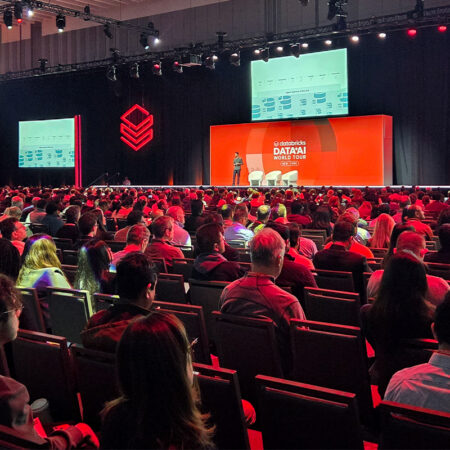
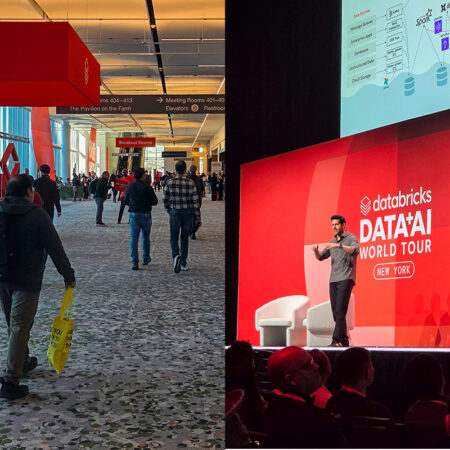
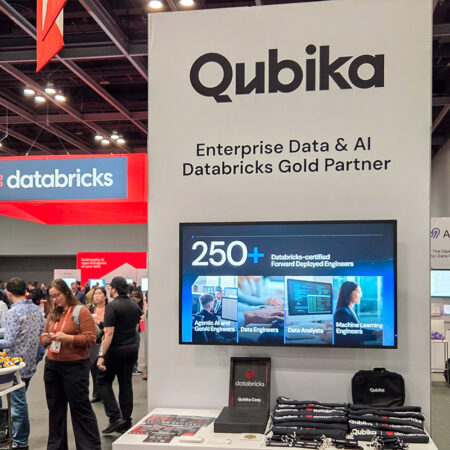
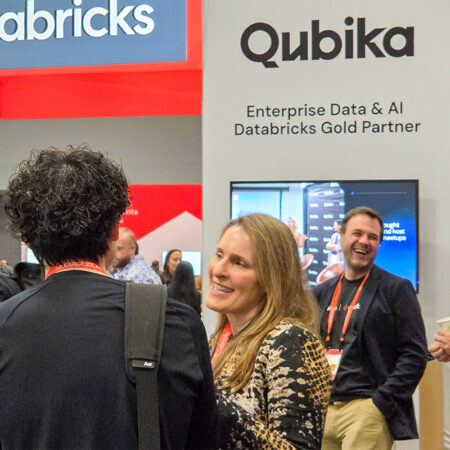
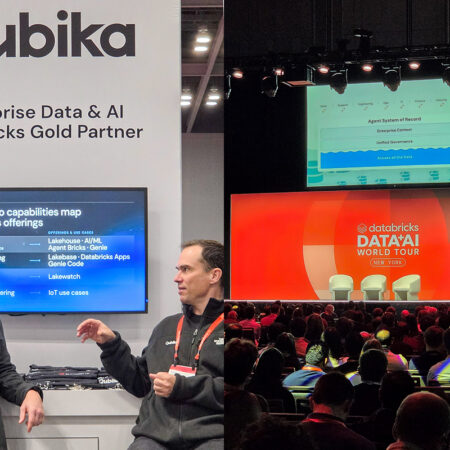
Qubika is an Explorer sponsor at the Databricks Data + AI World Tour New York, held on November 19 at the Javits Center. As a Databricks Gold Partner, our Data and AI team is at Booth 23, meeting with enterprise teams planning their 2027 data and AI roadmaps. We followed the opening keynote closely. These are the takeaways that matter most for teams moving AI from pilot to production.
Databricks opened the New York stop of its Data + AI World Tour with one idea: models are smart enough. What holds companies back is context, control, cost and choice. The keynote answered each one in order, from the data layer up to the applications. Databricks now has 20,000+ customers, including more than 70% of the Fortune 500, and a revenue run-rate above $7B growing 80%+ a year. This post follows the same order.
The frame: an agentic system of record
Applications will break apart. What stays is an agentic system of record with three parts: all data in open formats, governance across every source, and shared context that every agent can use. Databricks builds it as three layers. The data layer gives choice. The governance layer gives control and cost management. The context layer makes agents accurate. Context is built once, centrally, not separately in each app.
Choice: the data layer
The first layer is open. Data sits in Delta Lake and Iceberg, runs on any cloud and works with any model. Lakeflow handles ingestion, declarative pipelines, no-code prep and orchestration. Genie Code now authors more than 70% of pipelines, and Genie Zero Ops keeps them running. It detects a problem, assesses it, proposes a fix and tests it in a sandbox. A human approves it before production.
Next, Databricks unified analytics and transactions. LTAP (Lake Transactional / Analytical Processing) serves both from one copy of data. Lakehouse handles analytics. Lakebase, built on open-source Postgres, handles transactions. That removes CDC pipelines and data duplication, and leaves one governance layer.
Two new pieces make LTAP practical. Lakehouse RT brings real-time warehousing to the lake, with latency as low as 10 ms and up to 12,000 queries per second. Traditional warehouses hit a floor near one second. Lakebase provisions in under a second and supports branching, scale-to-zero and cross-cloud disaster recovery. Agents now create and delete over 80% of databases.
Disney showed this layer at scale. Its identity, fraud and payments teams run a federated ML platform on Lakehouse, and trained 3x more models in a year while AI-driven threats doubled. That scale leads to the next layer: governance.
Control and cost: the governance layer
Governance now goes beyond access control. It covers files, models, PDFs, business semantics, lineage, cost and AI itself. Agents, MCPs, skills and models connect to each other, and cost is hard to predict. Databricks listed the problems: no view of spend by user, team or agent; blunt limits that slow AI work; frontier models used by habit; lock-in as the best model changes weekly; and no clear guardrails or traces when an agent fails.
Unity Gateway is the answer: one control plane for the whole AI estate. It sets budgets by user, team and agent, routes requests to the best model or tool, traces activity, and enforces access, policies and audit on every interaction.
The demo showed the workflow. An admin at a fictional company saw the annual AI budget used up in about four months after coding agents rolled out. The admin set per-user limits, then used Genie to analyze millions of traces. It found frontier models doing simple jobs, like drafting Slack messages. Smart routing moved those jobs to cheaper models. Cost fell 12% from peak.
Databricks named four savings levers: lower-cost models (about 50%+), smart routing (about 30%+), spend controls (about 10%+) and observability tuning (about 10%+). These are vendor estimates. Control keeps spend and risk in check. Context decides whether agents give the right answer.
Context: the application layer
An LLM pointed at raw data is slow, costly and low quality. Genie Ontology captures enterprise context: business definitions, metrics, workflows and priorities. It combines modeled knowledge, such as board-reported revenue, with learned knowledge from Slack, Teams, decks and docs. OntoRank, inspired by PageRank, ranks each snippet by recency, relevance and permissions. Databricks reports accuracy above 80%, against about 50% for context-free approaches, with lower token use and latency.
Genie uses that context for three groups of users. Business users get chat-to-agent. Genie One creates documents and slides, schedules recurring analyses, runs always-on agents and takes action in business apps. Genie Search adds hybrid search across enterprise content, and Genie App Builder creates apps from natural language. Data practitioners get Genie Code and Genie Zero Ops. Developers get tools to build custom agents, with memory, search, sandboxes, evaluation and observability, plus the open-source Mosaic AI Agent Framework.
Databricks is also building native solutions for problems customers keep rebuilding. The first two are LakeWatch, a security product with agentic threat hunting and remediation, and Customer Lake, a customer 360 for marketing with identity resolution and autonomous campaigns.
Governance before scale
Two Databricks customers on stage, Moody’s and Mondelēz, made the same point. Both started with fragmented data and time lost reconciling numbers, and both defined business terms, metrics, access controls and data quality before scaling Genie. Now their business users trust the answers they get. One wrong answer sends people back to Excel. Their shared advice: start with the business problem, put trusted data underneath, and make AI easier than the process it replaces.
What this means for your data strategy
The keynote’s order works as a plan. Start with choice: open formats and one copy of data cut cost and risk, because every copy and every CDC pipeline has a price. Add control: set budgets, guardrails and traces for agents from day one. Then build context: define your metrics and business terms once, centrally, so agents give answers people trust.
How Qubika helps teams put these announcements to work
Qubika is a Databricks Gold Partner with 250+ Databricks-certified engineers. Our Data Studio helps enterprise teams evaluate Lakehouse RT and Lakebase, define a governed semantic layer in Unity Catalog, and set budgets, guardrails and traces for AI agents before they scale.