











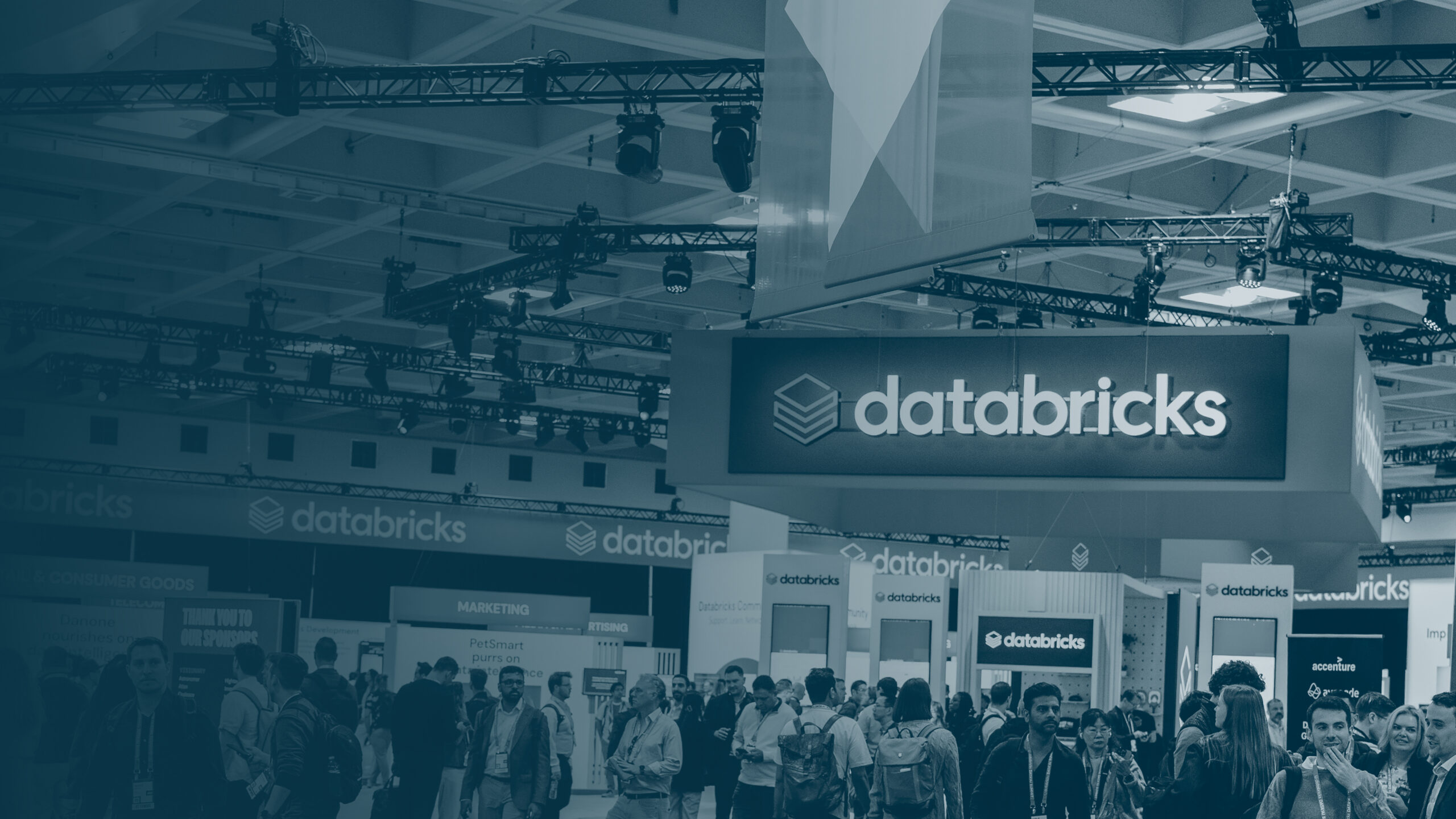
Back at the summit, this time as a Gold Tier Partner. San Francisco. June 2026. 30,000 people converging on the biggest data and AI conference on the planet. Qubika was invited to the Partner Keynote where Databricks announced OpenSharing, Genie Agents, Databricks Marketplace, and Lakebase. Here’s everything that was announced and what it means for the next 12 months
The Big Theme: Proprietary Data Has Never Been More Valuable
The through-line across the entire keynote was this: AI doesn’t commoditize your data — it makes it more valuable than ever. Databricks’ pitch to partners was direct: help customers unlock their proprietary data, govern it properly, and you’ll close larger deals faster, with entirely new commercial models that weren’t possible before. As someone who has spent the last several years helping enterprises go from digital-native to AI-native on Databricks, that framing resonates.
OpenSharing: Delta Sharing Graduates to the Agentic Era
Delta Sharing — Databricks’ open protocol for cross-cloud data sharing — just got a major upgrade. Last week, Databricks announced OpenSharing, extending the protocol beyond structured datasets to cover AI assets: AI skills, models, and Genie Agents.
The motivation is practical: customers want to share more than tables, and a lot of their data still lives on-premises due to residency requirements, transfer costs, or regulatory constraints. OpenSharing addresses both fronts:
-
On-premises data: partnerships with leading storage vendors — MinIO, VAST, NetApp, Qumulo, Cohesity, HPE, and others — implement the OpenSharing protocol natively, so customers can run lakehouse analytics on data that never moves to the cloud.
-
Any cloud, any tool: unlike platforms trying to lock customers into walled gardens, OpenSharing is designed to work with whatever tools customers already use. Snowflake now supports inbound OpenSharing — making it the only single protocol you need to share with any customer on any cloud using any tool.
Three new infrastructure capabilities land alongside it: Iceberg Interoperability (reach any platform that supports Iceberg), SecureConnect (one-time network setup for unlimited recipients instead of per-recipient configuration), and Global Distribution (Databricks replicates data to the regions where customers need it, with zero egress overhead on the provider’s side).
The business implication that got the room talking: OpenSharing unlocks a new model for data licensing. Today, data providers and prospective customers are stuck in a pre-sales stalemate — providers don’t want to grant access before they know they’ll get paid; buyers can’t evaluate fit without seeing the data. OpenSharing, combined with Genie Agents and Marketplace monetization, opens the door to pay-per-question models, targeted natural language interfaces that blend provider and customer data, and commercial innovation that was previously impossible without exposing underlying schemas or IP.
Databricks Marketplace: A Real Revenue Channel for Partners
Databricks Marketplace is becoming a full commercial engine — and the announcements today make that concrete for partners.
Databricks Apps on Marketplace — Apps is one of Databricks’ fastest-growing product lines (5x growth since last summit, 5,000+ accounts running production apps weekly). Starting this week, apps can be listed and distributed to Databricks’ 20,000+ customers worldwide. Partners publish the app; customers deploy it into their own workspace with one click; Unity Catalog and Unity AI Gateway handle permissions. Customers never see the underlying code — IP stays protected, and the data never leaves the customer’s environment.
Examples shown on stage: identity matching apps for clean rooms, advertising campaign activation, and Python-based filtering tools. The message was explicit: this isn’t just for software vendors.
Genie: The Most Talked-About Product in the Room
Why Another AI Agent?
The honest argument made on stage: existing AI agents are simply not good at data. There are two categories. Summarization agents can hold context and stitch together answers — but they can’t process data. Coding agents (like Claude Code or Cursor) can write and run code, but benchmarks run internally by Databricks against real employee questions showed a significant performance gap versus Genie — not because those tools are bad, but because they’re not specialized for data work. The underlying research point: data tasks and coding tasks are fundamentally different problems. Databricks’ bet is that knowledge work is data work, and the market needs an agent purpose-built for it.
Genie Ontology: The Technology Behind the Performance
The performance advantage comes from a new technology announced at this summit: the Genie Ontology. It’s an automatic context layer that continuously extracts information from all knowledge sources connected to Databricks — AI/BI dashboards, data pipelines, notebooks, historical queries — and stores it in an internal knowledge store. Rather than requiring someone to pre-model every metric, Genie Ontology can infer concepts like “summit registration” from existing dashboards and use them in live calculations on the fly. When Genie answers a question, it shows exactly where that information came from — which asset, which author, which ontology snippet. The demo of this was genuinely impressive.
Genie One: The AI Coworker for Everyone
Genie One is the new flagship: a full coworker experience that works across structured and unstructured data, powered by the Genie Ontology. It goes well beyond answering questions — it automates actions, runs background tasks, creates interactive documents, and lets users build agents directly from their conversations. The interface that makes all of Databricks accessible to every person in an organization, not just data teams. Features shown: interactive documents, pre-built connectors, scheduled tasks, custom tool orchestration, custom skill creation and sharing, and agent creation.
Genie Agents: The Evolution of Genie Spaces
Genie Agents is the next evolution of Genie Spaces — and this is directly relevant for anyone who has already built Genie Spaces implementations (there are customers with 1,000 Genie Spaces in production). The key additions:
-
Unstructured data support: agents can now answer questions over unstructured content, not just structured tables.
-
Custom MCP tool calling: agents can take real actions via Model Context Protocol integrations, not just answer questions.
-
OpenSharing integration: starting this week, partners can share Genie Agents with end customers via OpenSharing. Customers combine those agents with their own data without needing to learn any schema or write any code — and without seeing the provider’s underlying tables.
The service opportunity is real: migrating Genie Spaces to Genie Agents, modeling business semantics in Unity Catalog’s new Business Glossary, and building domain-specific agents are all high-value implementation engagements. This is squarely in Qubika’s wheelhouse.
AI/BI: Migration Tooling and New Capabilities
Genie Code now generates ready-to-use Databricks assets from existing Tableau and Power BI reports — Metric Views promotable to Unity Catalog, and AI/BI dashboards wired to those metrics.
On the product side: shared bookmarks, custom visualizations, Gantt charts, drill-down, automated dashboard insights, Vibecoded custom dashboards (Preview), Slack/Teams subscriptions with CSV attachments, parameterized jobs, and a new low-latency high-concurrency engine called Reyden. Unity Catalog is also getting multi-fact modeling, OSI support, and Business Glossary as part of its expanded semantic layer.
Lakebase: The Database Built for the AI Era
The Lakebase session reframed the database problem from first principles. AI-native applications are fundamentally different from traditional ones — they’re generative, agentic, and they multiply fast. A company that once ran 20-100 internal applications may now be generating thousands. Multiply by environments (dev, staging, production, per-feature branches), multiply by developers, and traditional database architectures simply can’t keep up.
Storage-compute separation is Lakebase’s core architectural answer: storage lives on the lakehouse in open formats, compute is Postgres-compatible and scales to zero. Infinite storage capacity, true pay-for-what-you-use compute. Developers can spin up a database per feature branch without thinking about cost. Replit is doing this in production: roughly 40,000 new applications created per day on the platform, each generating ~500 branches during development.
Branching and snapshot-restore is the killer feature for AI-native development — and it solves a real documented problem. Agents given access to production databases and a loosely-specified goal have literally dropped production databases in the wild (it’s happened). Branching gives agents sandboxed environments to work in safely. If you don’t like what the agent did, roll back. Every operation — branch, snapshot, restore, database provisioning — completes in approximately one second. A database scaled to zero comes back online in 500 milliseconds.
CDC elimination: because Lakebase storage is the lakehouse, engines like Databricks SQL can query Lakebase data directly through the lake — no Change Data Capture pipelines, no replication slots, no extra load on production. For every data engineer who has suffered through broken CDC pipelines, this is significant.
Cross-cloud Disaster Recovery: the first fully managed cross-cloud DR for an operational database. Lakebase can be deployed across multiple regions and multiple clouds simultaneously. In the event of a cloud outage, automatic failover switches workloads to another region or provider. As more organizations run critical operations on agents — where a cloud outage becomes a full business disruption — this stops being a nice-to-have.
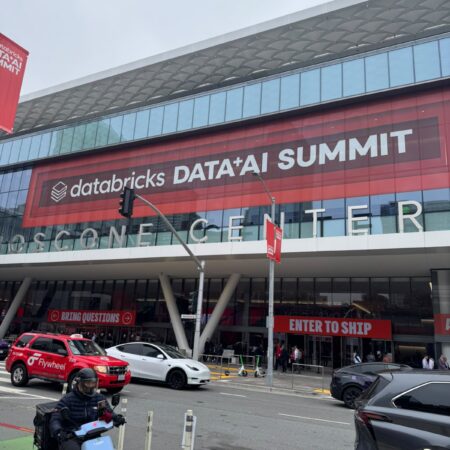
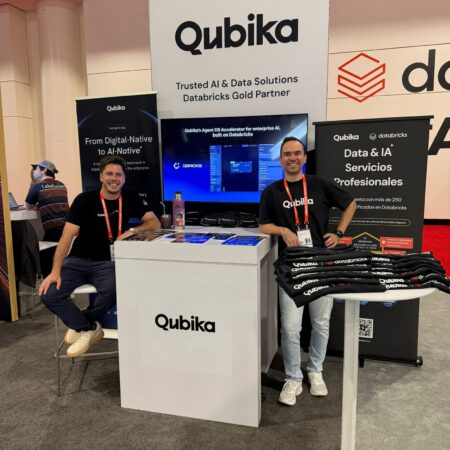
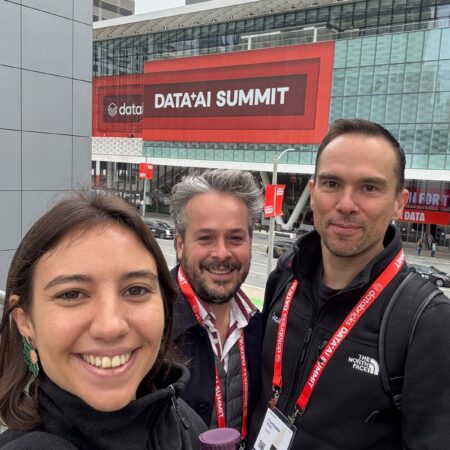
The team is already here! As a Databricks Gold Partner, Qubika is at Booth 541, Halls EF, Zone 5, co-hosting side events with Databricks and presenting on the official summit agenda.
Our SVP of Data & AI, Sebastian Diaz, on building modern data foundations on Databricks.
Stop by our booth or register for our session to explore how Qubika can help you turn these announcements into competitive advantage.
Ready to implement these Databricks innovations?
Qubika's 200+ Databricks-certified engineers are ready to help you implement OpenSharing, build custom Genie Agents, and optimize Lakebase for your organization.