












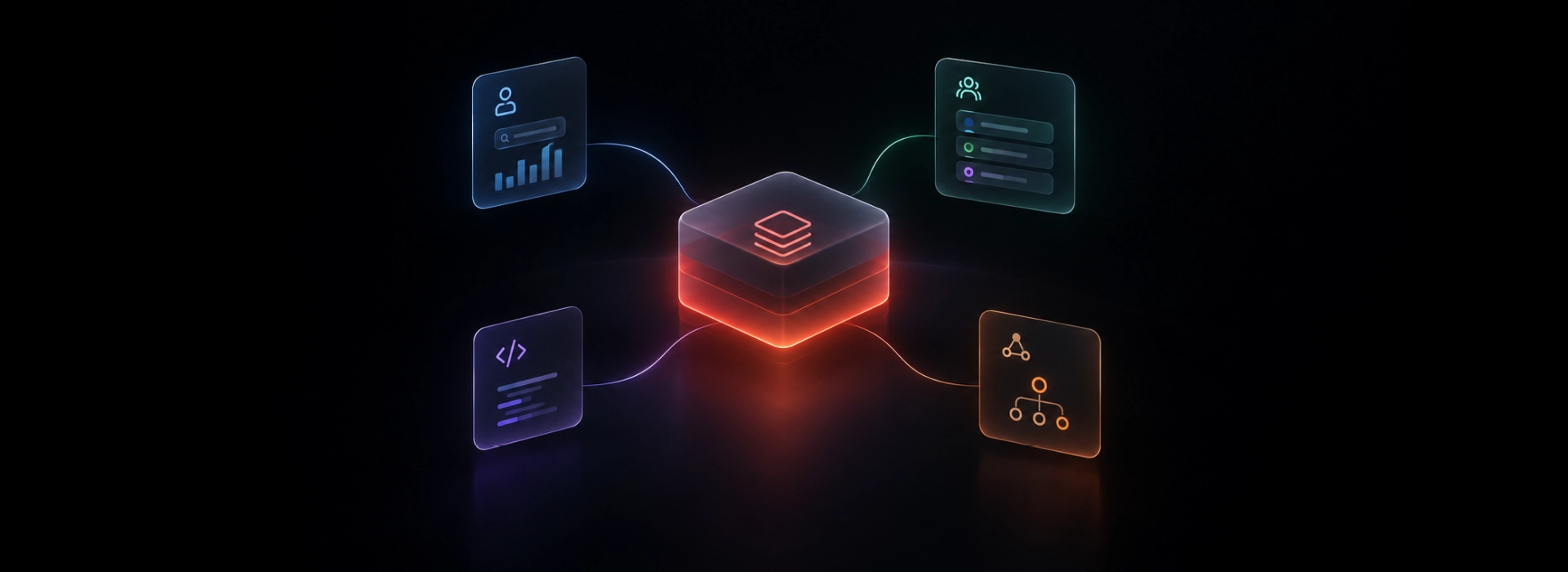

Today, anyone can turn an idea into a product in seconds. The distance between having an idea and holding a working version of it has shrunk dramatically, and the results keep getting better. Someone with the right AI tools can design interfaces, generate code, build prototypes, and launch products at a pace that would have been unimaginable just a few years ago.
AI is remarkably good at producing answers, but it never stops to question whether we’re asking the right ones. AI learns from everything available on the internet — the same articles, the same design systems, the same frameworks, the same best practices as everyone else. Which means that if you don’t give it a specific visual direction, it defaults to the same patterns everyone else’s tool defaults to. Two people can start from completely different prompts, using different models, and still land in a strikingly similar place.
The AI aesthetic is everywhere. You know the look: Soft pastel gradients, usually purple, blue, or pink. Rounded everything — buttons, cards, containers. Shadows barely visible. Generous white space. A floating 3D object somewhere in the hero section. It’s not bad design. It’s clean, it’s modern, it reads as “professional” at a glance.
It’s also everywhere. And when everything looks clean, modern, and professional in the exact same way, none of it stands out.
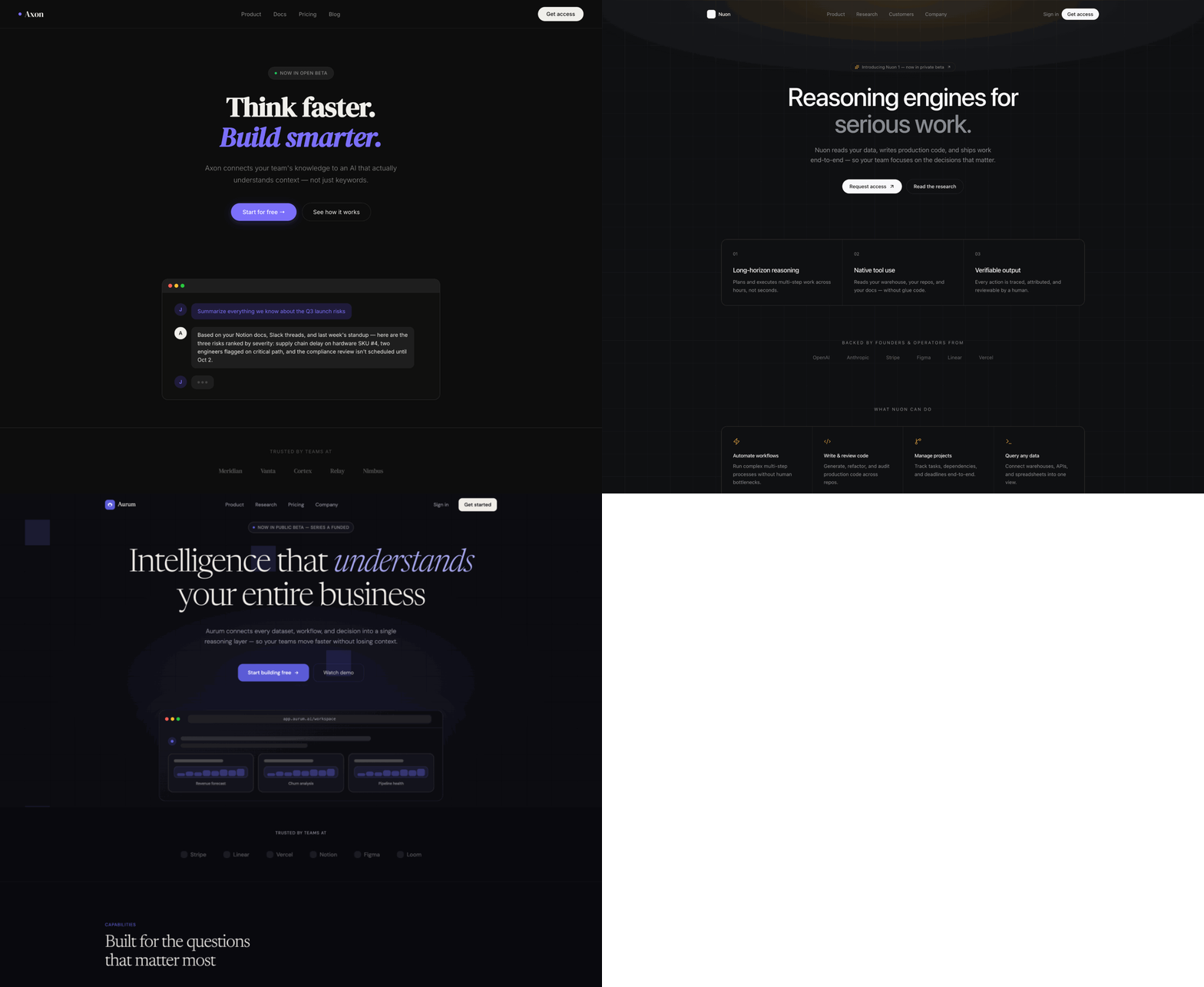
One prompt run through three different tools converging on the exact same look: dark background, purple gradient, bold headline.
What happens when every product starts to look like every other product?
That’s the question that actually matters right now. As Yuhki Yamashita, Chief Product Officer at Figma, put it: “If AI can make anyone a product builder, the real edge is knowing what’s worth shipping.”
AI can be genuinely good at generating a design from a single prompt. What it doesn’t have by default is context. Unless you explicitly give it that context, it doesn’t know your product, your customers, or your users. It doesn’t know what you’ve already tried and ruled out, or whether a given solution is actually better—or worse—for the specific situation you’re solving.
It can hand you ten variations of a pricing page in seconds. What it can’t do is tell you which one to pick, why, what’s missing from all ten, or what edge cases show up if you implement A instead of B. That decision, that judgment call, is still ours. And it can’t be automated away, because AI can’t reason from something that was never documented in the first place. Originality and critical judgment don’t live in a dataset.
We saw this play out in two very different starting points. In one case, we started from something AI had already generated and pushed it further, the value we added was in the why: the UI decisions, the business logic, the way we shaped the proposal around what the product and the communication actually needed. In the other, we started from zero and used AI to move faster, but the value came from staying critical about what it gave us, trusting our own read on structure and layout instead of accepting the first output.
Different entry points, same conclusion: AI accelerated the how. We were still the ones deciding the what and the why.
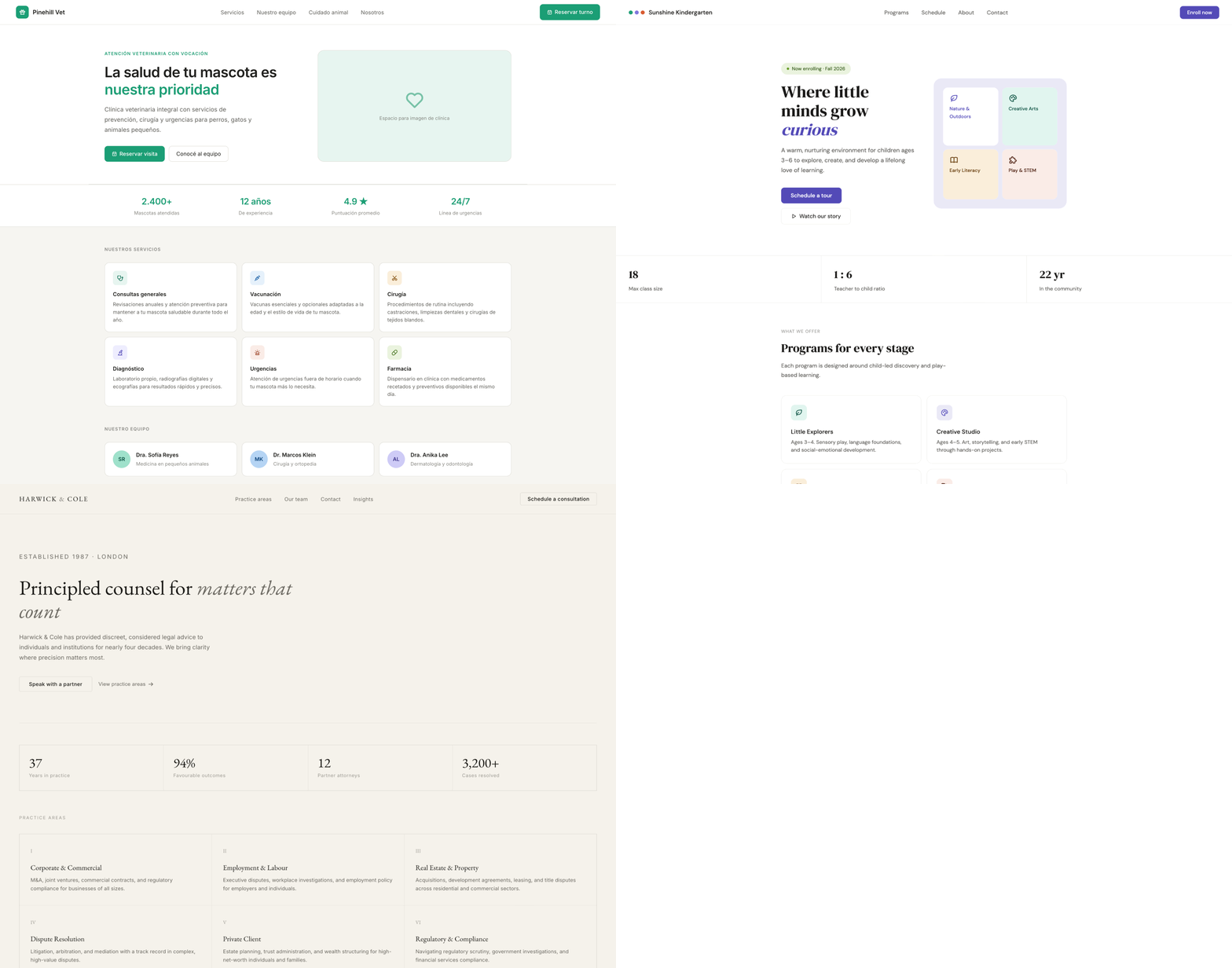
Same tool, three different prompts: a vet clinic, a kindergarten, a law firm. The result is the same layout, same spacing, same visual logic. The tool has a default, and without a strong point of view, that default wins.
What does seem clear is this: using AI isn’t the problem. The risk isn’t that we use it, it’s that we stop adding our own input as designers and as thinkers. AI is very good at automating the parts of the job we’re happy to hand off. It’s not good at replacing the parts that were never really about execution in the first place.
That’s exactly why craft matters more now, not less. If the baseline keeps rising and everyone has access to the same tools, standing out stops being about how something was built and becomes entirely about the decisions made along the way. After all, no tool should limit where an idea can go. Some ways we can push beyond the obvious include:
- Look for the unexpected. The obvious solution is the one AI will hand you first. The interesting one is usually one step further.
Even Mobbin’s 404 page doesn’t feel like a dead end, it turns ‘page not found’ into a game, asking designers to guess which app a screen belongs to.
- Break conventions on purpose. Not for the sake of being different, but because “that’s how everyone does it” is rarely a good enough reason on its own.
Not Boring took the most templated category in app design, the weather app, and asked why it had to look like every other weather app. The answer: it doesn’t.
- Go for playful, interactive concepts. Interfaces that invite people to poke around, discover something, or just have a small moment of fun.
Duolingo turned repetition — the least fun part of learning — into something people actually look forward to opening every day.
- Design interfaces with personality and intention. Every choice — a transition, a copy line, a sound — should feel like someone decided it mattered, not like it was the statistically likely default.
Every illustration, transition, and line of copy in Headspace feels like it was chosen on purpose — because calm isn’t just a mood, it’s a design decision.
As Yamashita also put it: “Craft is what separates the memorable from the merely functional. It’s active: choosing, not accepting.”
Maybe that’s the real shift. Not how to build — that part keeps getting easier every week. The harder, more interesting question is what’s actually worth building at all and everything we bring to the table: the questions we ask before building, the empathy we develop for real people, the judgment to know when “good enough” isn’t, the willingness to break a convention on purpose. None of that shows up in a prompt. It never will. That’s not a limitation of AI. It’s the reason we’re still here.
That’s the mindset we bring to every project at Qubika. We believe speed only creates value when it’s paired with strong product thinking. Our job isn’t just to help clients build faster, it’s to help them build the right thing, make intentional decisions, and create products people remember instead of products that simply follow the latest pattern.